
Treatments
Deep Brain Stimulation in China: Records International Patients Should Prepare Before Evaluation
Prepare for a DBS evaluation in China with Parkinson's, tremor or dystonia records, symptom videos, medication history, imaging and follow-up questions.
MedToChina Editorial Team · 9 min read · October 7, 2026
Quick Summary
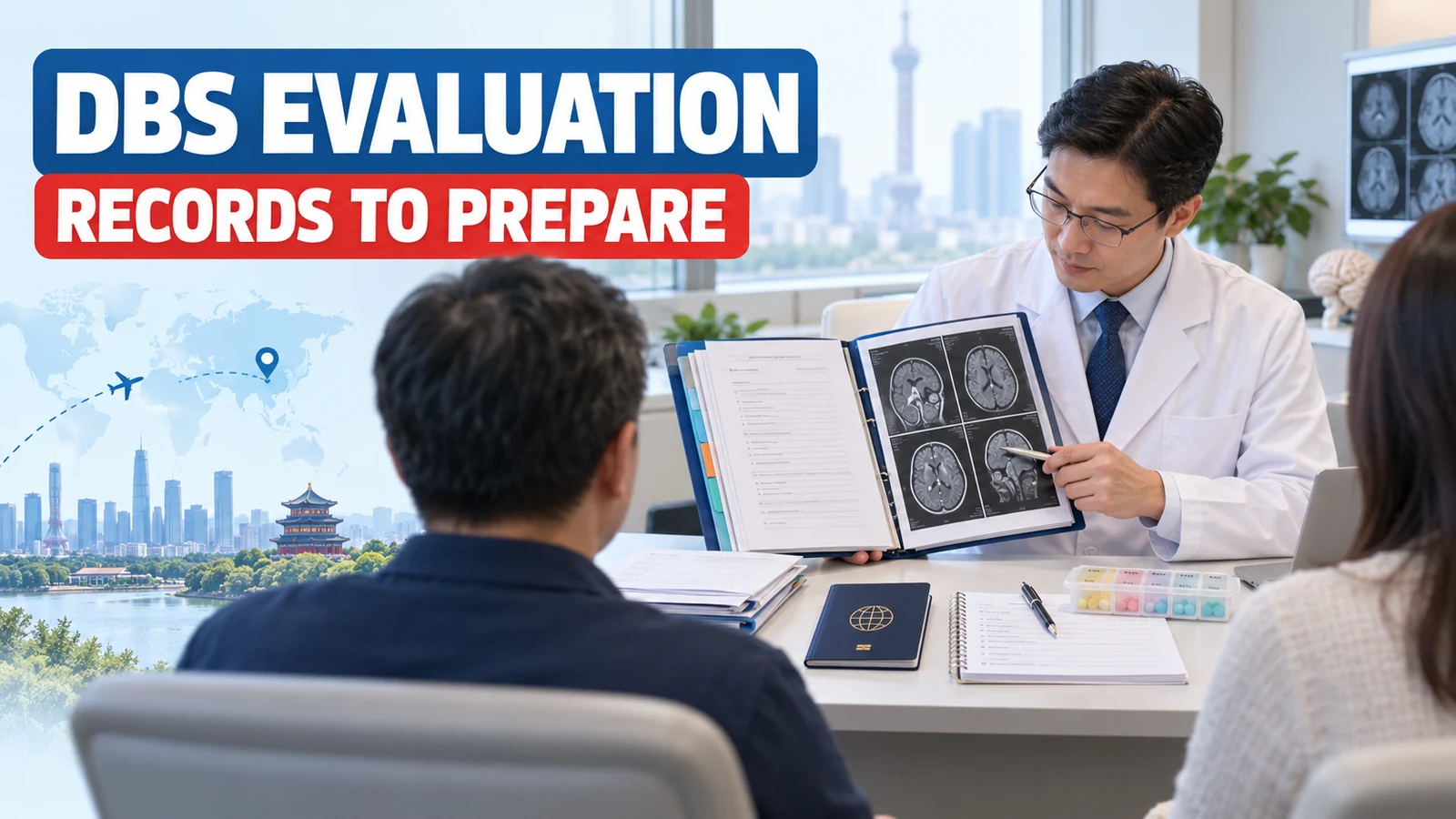
Deep brain stimulation (DBS) is a reversible, adjustable surgical therapy used for selected movement-disorder patients. It is not a universal treatment and an overseas patient cannot determine suitability from a webpage. Before considering travel to China, organize a clear diagnosis history, medication response, symptom pattern, brain imaging, prior procedures, cognitive or mental-health history, current health conditions and practical follow-up plan. Short symptom videos and a caregiver's observations can make the first conversation more concrete. A formal DBS evaluation may involve movement-disorder neurology, neurosurgery, neuropsychology, psychiatry, imaging, laboratory testing and anesthesia assessment. Final clinical decisions, device choices, surgery timing and programming plans belong to the receiving medical institution and licensed clinicians.
Reviewed October 7, 2026.
What DBS Is and What It Is Not
DBS uses surgically implanted electrodes connected to a programmable pulse generator. The system delivers electrical stimulation to selected brain targets. It is used in carefully selected patients with conditions including Parkinson's disease, essential tremor and dystonia; indications, targets and eligibility differ by diagnosis and jurisdiction.
DBS does not cure Parkinson's disease or stop all disease progression. It may improve particular motor symptoms for some appropriately selected people, while symptoms such as balance, speech, thinking or freezing may respond differently. Surgery and programming can also have risks and side effects. The key question is not simply “Can I have DBS?” but “Which symptoms are causing disability, how have they responded to treatment, and what must be assessed before any surgical decision?”
For Parkinson's disease, published consensus guidance emphasizes motor fluctuations, dyskinesia, medication-refractory tremor, levodopa response, cognitive and psychiatric status, medical comorbidities, expectations and family support. This is why a complete record package matters more than a brief diagnosis label.
Who May Need a Formal DBS Discussion
Only a specialist team can assess a person. In general, people seek a DBS evaluation when a diagnosed movement disorder continues to interfere with daily life despite medication optimization, or when medication effects and side effects become difficult to manage. The clinical question differs across Parkinson's disease, tremor and dystonia.
For Parkinson's disease, the team may ask about “on” and “off” periods, dyskinesia, tremor, slowness, rigidity, walking, falls, speech and non-motor symptoms. For essential tremor, the focus may include functional limitations such as eating, writing, drinking or working. For dystonia, the pattern, body distribution, previous treatments and functional impact matter.
Do not treat age, a single symptom, a social-media story or a device brand as a pass-or-fail rule. A first record review is not a surgery approval, and travel should not be booked until information gaps and the clinical process are clearer.
The Core Medical Record Pack
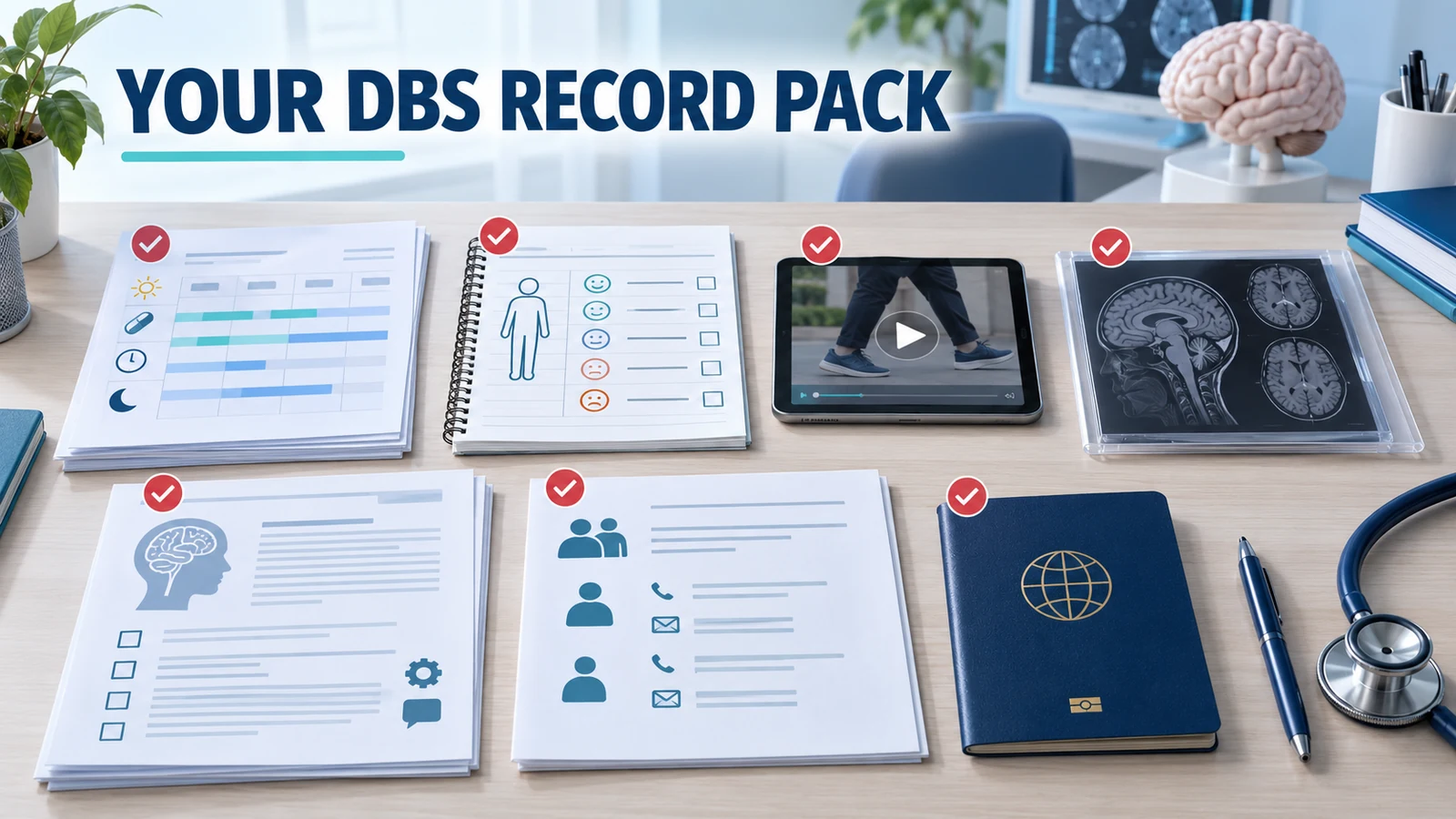
Organize documents by date, preserve originals and send searchable PDFs when possible. Include:
- A one-page timeline: diagnosis date, first symptoms, major changes and current limitations
- Neurology and movement-disorder clinic notes
- The exact diagnosis and diagnostic reasoning, if available
- A complete medication history: generic and brand names, doses, schedules, benefit, side effects and medicines already tried or stopped
- Recent laboratory results and relevant medical conditions
- Brain MRI or CT reports and original DICOM files when available
- Prior procedures, hospitalizations, rehabilitation and therapy notes
- Current medication list, allergies, anticoagulants and implanted-device details
- Neuropsychology, psychiatry or cognitive-assessment reports if already completed
- Cardiovascular, pulmonary or anesthesia-clearance information when relevant
For each medicine, explain what it changes. A list that says “levodopa” is less useful than one that states dose, timing, duration of benefit, wearing-off pattern, dyskinesia, nausea, hallucinations or other adverse effects. Do not change medication in order to create a better-looking record. Any medication challenge or withdrawal must be directed by the treating clinicians.
Make Symptoms Visible: Diaries and Short Videos
Symptoms fluctuate and may not appear during one appointment. A concise symptom diary can show medication timing, tremor, stiffness, slowness, dyskinesia, gait difficulty, falls, sleep issues and the activities that are becoming difficult. Note dates and whether the patient was before or after a scheduled medication dose.
Short, dated videos can supplement the history. With the patient's consent, record only the activities requested or useful for discussion, such as walking, turning, rising from a chair, handwriting, drinking from a cup or a tremor at rest. Use good lighting and show the whole relevant movement. Avoid edited compilations, music and public posts. The video does not provide a diagnosis; it simply gives the clinical team additional context.
Information the DBS Team May Need Beyond Motor Symptoms
DBS evaluation is broader than a tremor score. Be ready to describe:
- Memory, attention, decision-making or confusion concerns
- Depression, anxiety, hallucinations, psychosis, impulsive behavior or past psychiatric care
- Sleep, swallowing, speech, bowel and bladder concerns
- Falls, balance loss, assistive-device use and daily living needs
- Heart, lung, kidney, liver or bleeding conditions
- Previous infection, seizure history or head surgery
- Smoking, alcohol, supplements and non-prescription products
- The patient's own goals and what they hope will change
- The caregiver's ability to support travel, recovery and follow-up
These topics are not meant to exclude people automatically. They help the team discuss safety, expected symptom targets, consent and the practical demands of care. Be direct about uncertainty. Missing information can be requested; inaccurate information can create risk.
Why Follow-Up and Programming Matter for International Travel
DBS is not complete when the operation ends. The device needs programming, and medication adjustments may be considered by the treating clinicians. The pace and number of programming sessions vary. Medication changes should never be made independently; the treating clinicians should direct them.
Before travelling, ask the receiving institution about the anticipated clinical stages, potential need for in-person programming after surgery, what records will be provided, and what the home neurologist needs for continuing care. Ask your doctor at home whether they can provide follow-up for a person with a DBS system and what information they would need. If follow-up cannot be planned, the journey may not be practical even if surgery is technically possible.
Questions to prepare include:
- How will the clinician explain the expected assessment sequence?
- What recovery, wound-review and programming visits may be needed before travel home?
- Which records, device details and programming summary can be supplied at discharge?
- Who should be contacted if symptoms change after returning home?
- What travel precautions, imaging precautions and emergency information apply to the specific implanted system?
Do not assume that any clinic can alter settings, obtain compatible accessories or manage a system implanted elsewhere. Policies, training, local device availability and regulatory arrangements can differ.
Practical Preparation for a China-Based Evaluation
The Beijing, Shanghai and Guangzhou areas have major neurology, neurosurgery and tertiary-hospital resources, but the appropriate pathway depends on the condition and complete records. Start with information, not flights.
Prepare a concise package for WhatsApp or secure submission: diagnosis, key reports, brain imaging, medication timeline, symptom videos if available, current symptoms, country of residence, preferred travel period, language needs, caregiver plan and major questions. The service team can identify missing information and explain practical preparation steps after reviewing your submitted planning needs. It cannot determine candidacy, make a diagnosis through the website, promise surgery or choose a device through the website.
Ask practical questions about language support, medical-record translation, expected local stay, payment and deposit processes, hospital admission, discharge records and return-home continuity. These questions should support an informed conversation, not replace the hospital's assessment.
A Pre-Travel Checklist
- Keep passport, visa and travel documents separate from medical records.
- Bring original reports and a backup digital copy.
- Use original DICOM imaging files where possible.
- Carry enough regular medication in original packaging for delays; do not alter the regimen without clinical advice.
- Prepare a short medication-and-allergy page for travel days.
- Plan a capable adult companion if the patient's function, cognition or recovery needs make this sensible.
- Ask the treating team at home about travel safety and urgent symptoms.
- Do not book a return flight based only on an estimated operation date.
- Confirm the plan for programming, wound review and care after returning home.
Frequently Asked Questions
Is DBS a cure for Parkinson's disease?
No. DBS can help selected symptoms in selected people, but it does not cure Parkinson's disease or remove the need for ongoing neurological care. The response of individual symptoms varies.
Can I know if I am eligible from my MRI alone?
No. Imaging is one part of the assessment. Diagnosis, symptom pattern, medication response, cognitive and psychiatric status, health conditions and goals are also important.
What records are most important for a DBS inquiry?
Prioritize movement-disorder notes, medication history and response, symptom timeline, brain imaging with DICOM files, current medication and allergy list, prior procedures, relevant cognitive or mental-health information and a caregiver or follow-up plan.
Should I stop Parkinson's medicine before travelling for assessment?
No. Never alter medication because of a general online guide. Any medicine withholding or challenge must be specifically instructed by the clinical team.
Can DBS programming be handled after I return home?
Possibly, but this depends on the system, local services, clinician expertise and records. Confirm the continuity plan before travelling rather than assuming it will be available.
How long should I stay in China for DBS?
There is no fixed duration. Assessment results, operation timing, recovery, wound review, programming needs, complications and travel fitness can change the timeline. Obtain patient-specific guidance from the receiving clinical team.
Related MedToChina Resources
- China-ready medical records checklist
- Medical documents to prepare for care in China
- Language support in Chinese hospitals
- Medical clearance before treatment in China
- China hospital admission and discharge guide
Submit Records or Contact Us on WhatsApp
If you are exploring a DBS evaluation in China, submit your diagnosis summary, neurology notes, medication history, recent brain imaging, symptom timeline, country of residence, preferred travel window and main questions through MedToChina, or contact the service team on WhatsApp. After reviewing your practical information, the team can identify missing information and explain practical preparation steps.
MedToChina does not diagnose movement disorders or determine DBS eligibility through its website. Clinical evaluation, surgery, device selection, programming and follow-up decisions must be made by the receiving medical institution and licensed clinicians.
Medical Disclaimer
This article is general educational and travel-preparation information, not medical advice, diagnosis or a treatment recommendation. DBS indications, risks, devices, evaluation methods, hospital policies and travel requirements vary. Confirm decisions with qualified clinicians and seek urgent local medical care for acute or worsening symptoms.
References
- National Institute of Neurological Disorders and Stroke. Deep Brain Stimulation for Movement Disorders.
- Parkinson's Foundation. Deep Brain Stimulation.
- Bronstein JM, et al. Deep brain stimulation for Parkinson disease: an expert consensus and review of key issues.
- Pollak P. Deep brain stimulation for Parkinson's disease - patient selection.
- Lang AE, Widner H. Deep brain stimulation for Parkinson's disease: patient selection and evaluation.
- Chan AYY, et al. Eligibility Criteria for DBS in Parkinson's Disease, Tremor, and Dystonia.