
Visa & Travel
Medical Clearance Before Treatment in China: Risks International Patients Should Check
Check travel stability, flight risks, records, medicines and follow-up before seeking treatment in China. Learn why fit to fly differs from treatment review.
MedToChina Editorial Team · 9 min read · September 21, 2026
Quick Summary
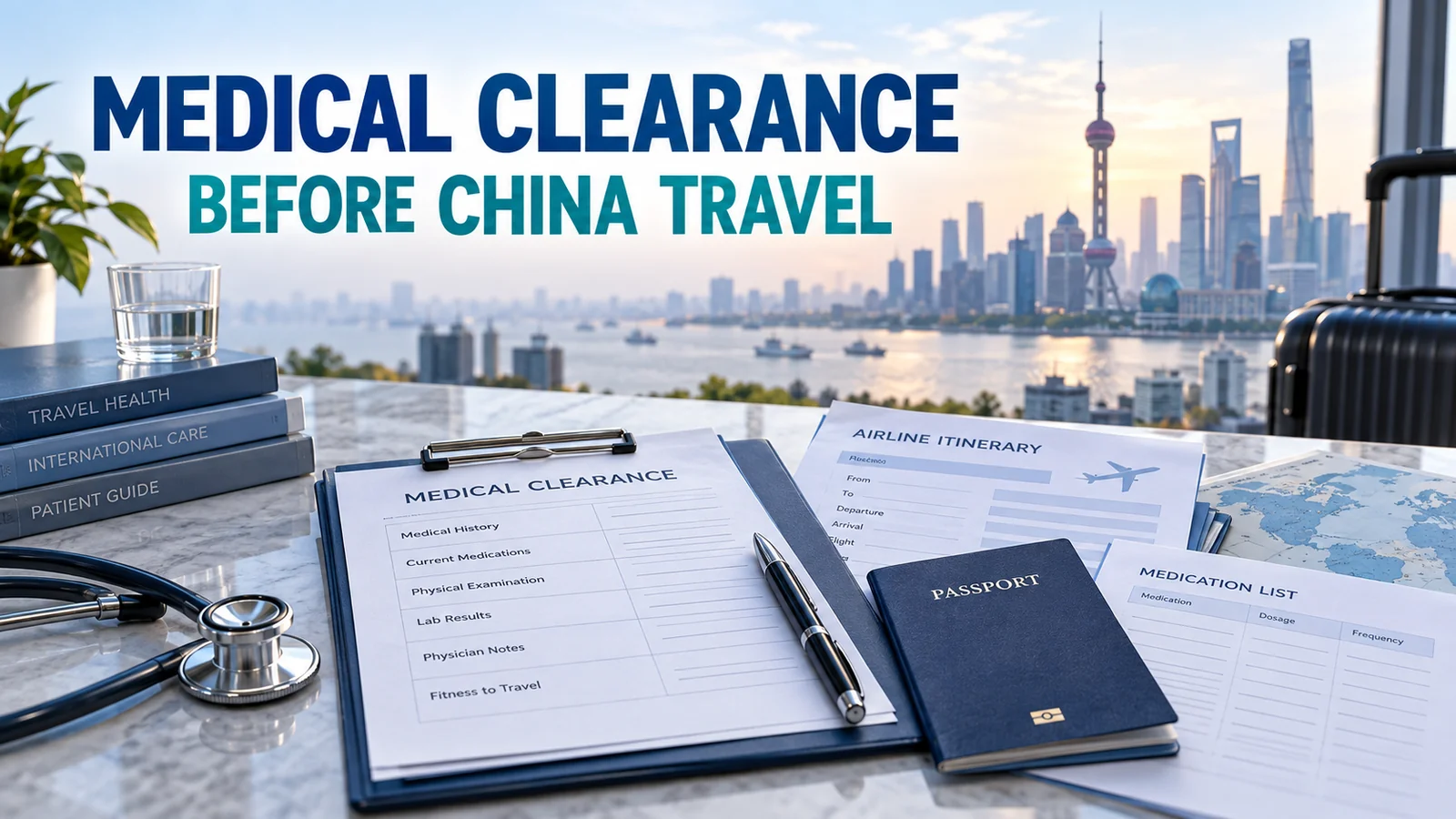
Medical clearance before treatment in China is not one universal certificate. An international patient may need three separate reviews: whether the current condition is stable enough for long-distance travel, whether the proposed treatment can be considered after clinical review, and whether an airline needs medical information or assistance arrangements. Active infection, unstable heart or lung disease, recent major bleeding, severe anemia, blood-clot risk, recent surgery, uncontrolled symptoms, immune suppression, mobility limitations and missing follow-up plans can change or delay travel. Patients should ask their treating clinician about travel fitness, prepare current records and send key information to MedToChina through the website or WhatsApp before making irreversible travel arrangements.
What medical clearance means for a patient traveling to China
Patients often use “medical clearance” as if it were one approval. In practice, it covers several decisions made by different parties.
First, your current clinician may need to assess whether you are stable enough to travel. This includes the journey to the airport, a long flight, transfers, walking or wheelchair use, medication timing and the possibility of a delay. Second, the Chinese medical institution must decide what additional information or in-person tests are needed before a proposed treatment can be considered. Third, an airline may request its own medical form when a passenger needs oxygen, a stretcher, mobility assistance or has a condition that could worsen in flight.
One decision does not replace the others. A letter saying that you can fly does not confirm that a procedure will go ahead. An initial review of records does not establish fitness for a long-haul flight. An airline accepting a passenger does not mean the patient's disease is stable enough for treatment.
MedToChina's role is to help overseas patients submit basic information, organize medical records and communicate through WhatsApp. Use the China-ready medical records checklist before sending documents. Medical and travel fitness decisions remain with licensed clinicians, relevant medical institutions and the airline when applicable.
Why long-distance travel can change medical risk
Commercial aircraft cabins are pressurized, but the cabin environment has a lower partial pressure of oxygen than at sea level. The CDC notes that this can worsen some problems in travelers with anemia, heart or lung disease, or cerebrovascular disease. Long periods of limited movement can also increase the risk of venous thromboembolism, especially when a patient already has factors such as active cancer, recent surgery, prior clots, limited mobility, pregnancy or hormone use. [1][2]
Travel also adds fatigue, dry cabin air, disrupted sleep, time-zone changes, prolonged sitting and the need to manage medicines away from home. A patient who functions comfortably at home may find a multi-flight itinerary much harder. Airport transfers, queues and ground transportation can be as demanding as the flight itself.
Reviewed September 21, 2026. The CDC's medical-tourism guidance recommends that people considering medical care abroad discuss the trip with a healthcare professional in advance. A travel medicine visit 4–6 weeks before departure is often suggested when time allows, but an urgent medical situation requires individualized planning. [3] The purpose is to identify risks and prepare for them, not to issue a general promise that travel will be safe.
Conditions that deserve review before booking
Unstable heart or circulation problems
Recent chest pain, worsening heart failure, fainting, poorly controlled rhythm problems, a recent heart attack, recent cardiac procedure or major changes in blood pressure require clinician review. Patients with a history of deep vein thrombosis or pulmonary embolism should ask specifically about long-distance travel risk and prevention. Do not start aspirin, anticoagulants or compression products solely from online advice; the right plan depends on bleeding risk, kidney function, drug interactions and the individual history.
Breathing problems or oxygen needs
Shortness of breath at rest, a recent lung infection, uncontrolled asthma, worsening chronic lung disease, a pleural effusion or an existing oxygen requirement may affect fitness to fly. Airlines differ in the equipment and notice they require. CDC guidance says travelers who need in-flight oxygen should arrange ground and in-flight support in advance and check which portable oxygen concentrators the airline permits. [1]
Active infection or fever
Fever, a contagious respiratory illness, pneumonia with symptoms, uncontrolled wound infection or another active infection can create risk for the patient and others. Immune-suppressed patients can become more seriously ill from infections and may respond differently to vaccines. A local clinician should review symptoms and the timing of travel. Destination and transit requirements can also change, so official travel health information should be checked close to departure.
Cancer treatment and immune suppression
Active cancer, chemotherapy, cell therapy, transplant-related medicines, high-dose steroids and some biologic drugs can affect blood counts, immunity and vaccine planning. The CDC identifies active cancer, recent hospitalization or surgery and limited mobility as blood-clot risk factors. Its guidance for travelers with chronic illness advises specialist assessment when cancer patients have major bleeding, severe immune suppression, significant anemia or thrombocytopenia, breathing difficulty or pleural fluid. [2][4]
This does not mean every patient on cancer treatment must avoid travel. It means the timing should be based on current symptoms, recent laboratory results, treatment cycle, infection exposure, expected procedure and return-home plan.
Recent surgery, procedure or bleeding
Recent abdominal, chest, brain or eye surgery may require a waiting period before air travel because trapped gas, healing tissue, bleeding risk and reduced mobility can interact with the cabin environment. The interval depends on the operation and recovery. CDC medical-tourism guidance notes increased clot risk after surgery and advises against flying soon after some major operations. [1][3]
Patients should ask the operating clinician for a procedure-specific answer. The relevant question is not simply “How many days?” It is whether healing, pain control, mobility, oxygenation, wound status and complications are stable enough for the planned itinerary.
Severe symptoms or reduced function
Uncontrolled pain, repeated vomiting, confusion, frequent seizures, major weakness, inability to transfer independently, new neurological symptoms or rapidly worsening disease can make unaccompanied travel unsafe. Some patients may need a trained companion, wheelchair support, extra transfer time or a different route. Others may need to delay travel and stabilize their condition locally.
Records to prepare for a useful review
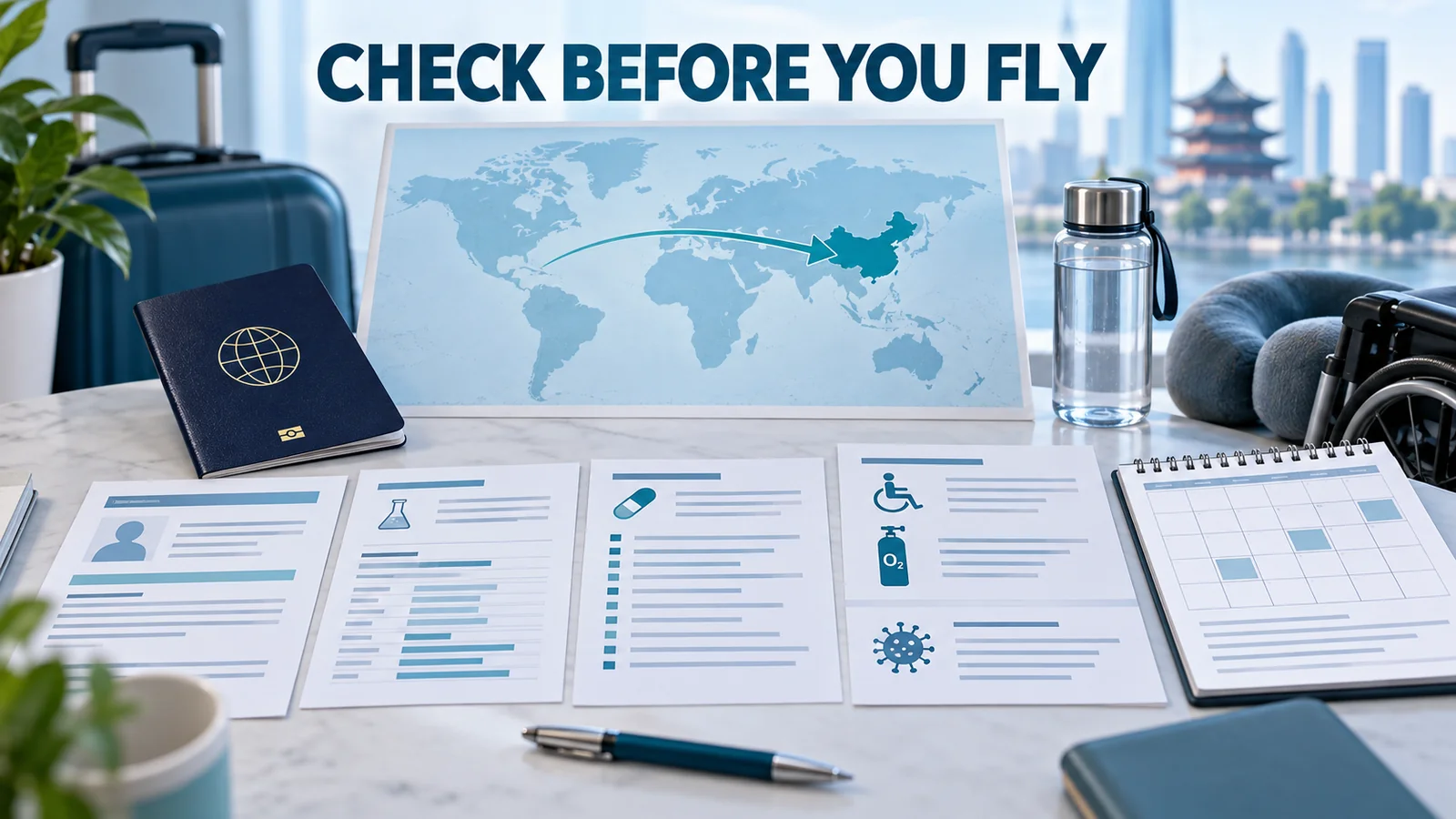
Start with a one-page medical summary containing the confirmed diagnosis, current symptoms, recent changes, major conditions, allergies, current medicines and the purpose of considering care in China. State what you can do independently: walking distance, stairs, bathing, eating and transferring from a chair. Mention oxygen, dialysis, ostomy, catheter, feeding tube, implanted device or mobility equipment.
Send recent objective information relevant to the condition. This may include blood count, kidney and liver function, coagulation tests, electrocardiogram, echocardiogram, lung tests, pathology, imaging reports and DICOM files. A cancer patient should include the treatment timeline and latest cycle. A recent surgical patient should include the operation note, discharge summary, wound status and any complications.
Include a complete medication list with generic name, dose and schedule. Record anticoagulants, insulin, steroids, seizure medicines, pain medicines, immune-suppressing drugs, herbal products and supplements. Do not stop or change these products simply to make travel easier without speaking to the prescribing clinician.
If records are not in English or Chinese, provide careful translations of the most important documents. Keep dates, dosage units, laboratory values and medical terms accurate. MedToChina can receive the summary and key records through the website or WhatsApp so the later service conversation begins with a clearer picture.
Fit to fly and fit for treatment are different
“Fit to fly” concerns whether the journey can be undertaken with an acceptable and understood level of risk. “Fit for treatment” concerns whether a particular intervention is medically appropriate after the relevant clinical assessment. A patient can be well enough to fly but not suitable for the expected operation. Another patient may have a potentially relevant treatment question but be too unstable for long-distance travel at that moment.
Chinese medical institutions may request repeat tests after arrival because laboratory values and symptoms change. Infection screening, cardiac assessment, anesthesia review or imaging may be needed before a procedure. Sending records before travel improves the conversation but cannot lock in a final plan.
Airline clearance is a third process. The airline may use its own medical information form, often referred to as a MEDIF or similar document, and may require advance notice for oxygen or special assistance. Requirements vary by carrier and itinerary. Contact the airline directly rather than assuming a doctor's letter is sufficient. IATA maintains an aviation medical manual, but each carrier applies its own operational procedures. [5]
Medicines, devices and airport planning
Review the medical travel safety and medicines checklist alongside this clearance discussion. Carry essential medicines in original labeled containers in hand luggage, with enough supply for the planned stay and possible delays. The CDC recommends checking whether medicines are permitted at the destination and transit points and carrying a prescription or medical letter where appropriate. [6] This is especially relevant for controlled pain medicines, sedatives, stimulants and injectable products.
Ask how temperature-sensitive medicines should be stored and transported. Carry a clinician letter for needles, insulin, injectable emergency medicines, oxygen equipment or implanted devices when relevant. Confirm battery and security requirements for powered wheelchairs, CPAP machines, pumps and portable oxygen concentrators with the airline.
Request airport and airline assistance early. Specify whether you can walk stairs, transfer to a seat, use the aircraft toilet or manage a long connection. “Wheelchair assistance” can mean different levels of help. A companion should understand the medication schedule, emergency contacts and what symptoms require urgent care.
Return-home planning is part of clearance
The return flight may be riskier than the inbound trip because the patient may be recovering from surgery, anesthesia, a procedure or a change in treatment. Before treatment begins, ask how long local monitoring may be needed and what clinical milestones should be met before travel home. Avoid relying on a fixed departure date before the care plan is known.
Prepare a follow-up pathway with your home clinician. Ask what discharge summary, imaging, pathology, laboratory results, prescriptions and device information should be carried home. Clarify wound care, medication changes, rehabilitation, emergency symptoms and how complications will be handled after return.
Insurance also matters. Use the China hospital cost-estimate guide and prepayment guide to prepare questions. Confirm overseas care, complications, trip changes and medical evacuation separately. A normal travel policy may exclude planned treatment or pre-existing conditions. Read the policy terms and obtain written clarification from the insurer where needed.
A practical pre-travel checklist
- Ask your treating clinician whether your current condition is stable enough for the full itinerary.
- Prepare a one-page summary, current medication list and recent key tests.
- Disclose oxygen, mobility, dialysis, infection-control and companion needs early.
- Ask what information is needed before discussing treatment resources in China.
- Check airline medical forms, equipment rules and assistance deadlines.
- Check medicine restrictions for China and any transit country.
- Plan for deposits, insurance limits, accommodation changes and a longer stay.
- Arrange return-home follow-up and keep emergency contacts accessible.
- Reassess if symptoms change before departure.
FAQ
Does MedToChina issue medical clearance?
No. MedToChina accepts information and records and supports communication through WhatsApp. Travel fitness, treatment suitability and airline acceptance are decided by the relevant clinicians, medical institutions and carrier.
Which symptoms should I report before travel?
Report fever, new breathing difficulty, chest pain, fainting, active bleeding, worsening weakness, confusion, uncontrolled pain, vomiting, new neurological symptoms and any recent hospital admission. Seek urgent local care when symptoms are severe.
Do I need recent laboratory tests?
It depends on the disease and proposed care. Blood count, kidney and liver function, coagulation and other tests may be relevant, especially after recent treatment or surgery. Ask which tests and dates are useful.
Can I travel with oxygen or a medical device?
Possibly, but airline approval, advance notice, equipment specifications and battery rules may apply. Discuss medical need with your clinician and operational requirements with the airline.
Should I buy a return flight before treatment is confirmed?
Use flexible arrangements where possible. In-person assessment, treatment timing and recovery can change the safe date for return travel.
What should I send on WhatsApp first?
Send your diagnosis, current condition, key records, medication list, recent tests, mobility or oxygen needs, proposed travel dates and the main question you want to discuss.
Related MedToChina Resources
- How to prepare for medical treatment in China
- Medical travel safety, medicines and travel health checklist
- China-ready medical records checklist
- China hospital cost estimates before travel
- China hospital prepayment questions
WhatsApp CTA
Planning medical treatment in China and unsure what health information to prepare? Submit your basic information or send your one-page medical summary, medication list and recent key reports to MedToChina on WhatsApp. Include any oxygen, mobility, infection or recent-surgery concerns so the next service conversation can focus on the right questions before travel.
Medical Disclaimer
This article is for general education and travel planning only. It does not provide a diagnosis, medical clearance, treatment recommendation, airline approval or assurance that travel or treatment will be suitable. Medical conditions and airline rules vary. Seek individualized advice from licensed clinicians, the relevant medical institution, airline, insurer and official authorities before changing treatment or making travel decisions. Seek urgent local medical care for severe or rapidly worsening symptoms.
References
- Centers for Disease Control and Prevention. Air Travel, CDC Yellow Book 2026.
- Centers for Disease Control and Prevention. Deep Vein Thrombosis and Pulmonary Embolism, CDC Yellow Book 2026.
- Centers for Disease Control and Prevention. Medical Tourism: Travel to Another Country for Medical Care.
- Centers for Disease Control and Prevention. Travelers with Chronic Illnesses, CDC Yellow Book 2026.
- International Air Transport Association. IATA Medical Manual.
- Centers for Disease Control and Prevention. Traveling Abroad with Medicine.
- World Health Organization. International Travel and Health: General Health Risks and Considerations for Travellers.