
Treatments
Pacemaker or ICD Follow-Up in China: Device Records to Prepare Before Travel
A records checklist for international patients with a pacemaker or ICD planning follow-up or cardiac care in China.
MedToChina Editorial Team · 8 min read · October 27, 2026
Quick Summary
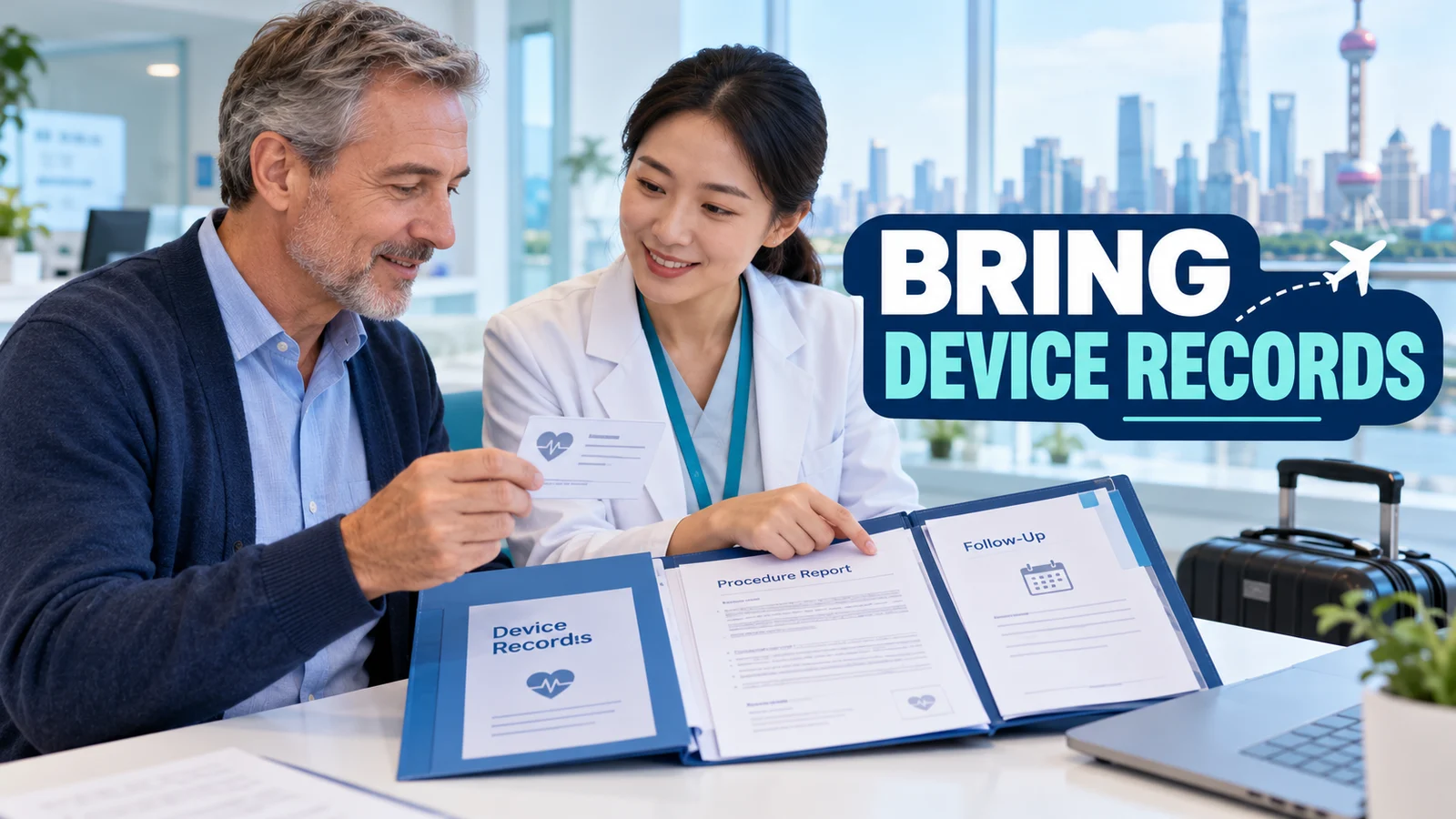
If you already have a pacemaker, implantable cardioverter-defibrillator (ICD), or cardiac resynchronization device, taking accurate device records to China can make communication with a receiving cardiac team more practical. Prepare the device identification card, implant and procedure reports, recent follow-up or interrogation summaries, current medication list, discharge records, and contact information for the team that currently follows you.
These documents do not establish that a particular hospital can provide device support, use a particular monitoring system, or make changes to the device. The receiving institution must confirm its own scope, equipment, and requirements in writing.
Reviewed October 27, 2026.
Why Device Records Matter When Travelling for Care
A pacemaker or ICD is not simply a diagnosis written on a problem list. It is a specific implanted system with a history: why it was implanted, when it was implanted, what hardware is recorded, what follow-up has occurred, and which clinical team currently has responsibility for ongoing care. That information may be needed when a patient seeks cardiac evaluation or follow-up in another country.
For an international patient coming to China, an organized record package can reduce basic misunderstandings. It helps the receiving institution identify what documents exist and lets the patient ask focused administrative questions. It does not replace a device-clinic assessment, change an existing care plan, or create a commitment that another institution will take over follow-up.
Keep the current team involved. Do not delay planned follow-up, silence an alert, change medication, or treat a travel plan as a substitute for advice from the clinicians who know the device and the patient's condition.
Pacemaker, ICD, and Other Terms in Plain Language
A pacemaker is an implanted device used to support heart rhythm when the heart beats too slowly or has certain conduction problems. An ICD can deliver therapy for particular dangerous rhythm problems. Some patients have a cardiac resynchronization therapy device, which may be combined with pacemaker or ICD functions. The reason for implantation, the device type, and the follow-up plan differ between patients.
This guide is not a device manual. It does not explain programming, alerts, magnet use, battery status, shocks, rhythm interpretation, or whether a device is compatible with a particular scan, security setting, airline, or monitoring service. Those questions require the appropriate device clinic, treating cardiology team, and relevant provider.
The Core Records to Bring or Upload
Start with the original device card, if you have one. It may contain manufacturer, model, serial, implant date, and other details recorded at implantation. Take a clear image or scan as a backup, but keep the physical card where possible. Do not guess missing details from a device name remembered by a family member.
Then organize the following documents by date:
- Implant procedure report and hospital discharge summary.
- Device identification card and any replacement card issued later.
- Most recent device-clinic or interrogation summary, if available.
- Earlier follow-up reports that show a meaningful change, a replacement, a lead-related procedure, or an event the treating team documented.
- ECG, rhythm-monitoring, echocardiogram, or cardiac imaging reports already performed.
- Current medication list and documented medicine intolerances.
- Records of any hospital admission, emergency visit, fainting episode, palpitations, shock, infection concern, or procedure involving the device, if documented.
- Contact details for the current cardiologist, electrophysiology or device clinic, and the institution that implanted the device.
If you do not have every report, record the hospital, city, and approximate date. Do not create a replacement report from memory or edit an original document.
Make a One-Page Device Summary
A one-page summary is useful when it points the receiving team to source documents. It should not try to interpret the device or diagnose a problem. Include only facts already present in records:
- Patient name as shown on passport and date of birth.
- Device category as written on the card or report.
- Implant date and implanting hospital, if known.
- Manufacturer and model exactly as recorded, without filling gaps by guesswork.
- Relevant procedure or replacement dates.
- Date and location of the most recent documented follow-up.
- Current device-clinic and cardiology contacts.
- Current medication list and important documented allergies or intolerances.
- A short list of practical questions for the receiving institution.
Keep the wording neutral. For example, write “device follow-up report dated 12 March 2026 attached,” rather than “device working normally,” unless that exact statement appears in a source record and is dated. A past report may not describe the current situation.
Follow-Up Reports: What to Preserve
Device follow-up reports can contain abbreviations, measurements, and programming information that are meaningful only in clinical context. Do not try to translate these into conclusions. Preserve the complete report, including date, clinic name, and pages that seem technical.
If a report identifies a concern, bring the complete associated note and any subsequent follow-up documentation. If an alert or symptom occurs before travel, contact the current device clinic or seek timely local care as advised by that team. A future appointment in China or an administrative records exchange is not an alternative to urgent assessment.
Patients who use a home-monitoring system should ask the current team how ongoing monitoring is handled during travel. Do not assume that a system will function in another country, that another clinic can view it, or that a receiving institution supports a specific platform. Those are provider-specific questions requiring written confirmation.
Questions to Ask a China Receiving Institution
Before travel, you can ask factual questions that clarify administrative capability without seeking a device decision by message:
- Does the institution accept records for a patient who already has a pacemaker, ICD, or cardiac resynchronization device?
- Which documents, languages, file formats, and identity information are needed before an appointment can be considered?
- Can the institution confirm whether it provides follow-up for the device category and model shown in my existing records?
- Is an in-person device-clinic visit required before any device-related assessment?
- Which official contact should receive device records, and how should sensitive documents be sent?
- What appointment status, campus, department, and arrival instructions are formally confirmed?
- If travel timing changes or new symptoms occur, which issues should be addressed by my current care team rather than the receiving institution?
The institution may need to review records before answering some of these questions. A response about document receipt is not the same as confirmation of an appointment, device support, or a clinical plan.

MRI, Airport Screening, and Monitoring: Do Not Generalize
People with cardiac devices often have practical questions about imaging, airport screening, or remote monitoring. These questions cannot be answered safely from an article because device model, leads, programming, clinical indication, local procedures, and provider policies all matter.
Do not use an internet list, another patient's experience, or a generic statement to decide whether to undergo a scan, how to approach a security checkpoint, or how to use a device-monitoring system abroad. Discuss imaging or travel-security questions with the treating device team and the relevant imaging, airport, airline, or travel provider. The China receiving institution should also confirm its own requirements if a visit is being planned.
Medication, Symptoms, and Travel Boundaries
Travel preparation can make people focus on practical documents and overlook changes in health. Do not adjust medication to make travel easier unless the prescribing clinician gives individualized instructions. Do not assume that fatigue, palpitations, dizziness, breathlessness, chest discomfort, fainting, an alert, or another new symptom is explained by travel stress or paperwork.
Seek timely local medical care for urgent or severe symptoms. This guide cannot determine whether a person is fit to fly, whether a symptom is device-related, or whether travel should proceed. Those are clinical decisions for the team responsible for the patient.
How MedToChina Can Support Preparation
MedToChina supports international patients considering care in China by helping them organize available records and practical questions for communication. Submit your information or send available documents and questions through WhatsApp. After understanding the condition, records, timeline, country preference, and practical needs, our customer service team can discuss possible China care resources.
We do not program, interpret, replace, or select cardiac devices; determine device compatibility; diagnose symptoms; decide travel readiness; or promise appointment availability, device support, admission, treatment, cost, or outcome. The relevant institution and clinical team must confirm any care arrangement.
Frequently Asked Questions
Do I Need the Original Device Card?
Bring it if you have it and keep a clear backup copy. If it is missing, provide the implant hospital and approximate date, then ask the current device clinic how to obtain documented details.
Can a Hospital in China Support My Device Based on the Manufacturer Name Alone?
Do not assume so. Support depends on the institution, device records, and its current processes. Ask the institution to confirm its scope after reviewing the relevant information.
Should I Change My Follow-Up Schedule Because I Plan to Travel?
Do not change planned follow-up without discussing it with the clinicians currently responsible for your device care.
Can This Guide Tell Me Whether I Can Have an MRI or Pass Through Airport Screening?
No. These questions require device-specific and provider-specific advice. Use your existing device clinic and relevant service providers.
What if I Have New Symptoms or a Device Alert Before Travel?
Contact the current device clinic or seek timely local medical care based on the situation. Do not wait for an international appointment or records response.
Does Sending Records Confirm an Appointment or Treatment in China?
No. Records submission does not confirm acceptance, appointment, device follow-up, admission, procedure, or treatment. The receiving institution must confirm any next step.
Contact MedToChina on WhatsApp
Submit your information or send your device records and practical questions through WhatsApp. We can help you prepare an organized administrative checklist before discussing possible care in China.
Medical Disclaimer
This article provides general information for international patients with existing cardiac devices who are considering care in China. It is not medical, diagnostic, treatment, device-programming, imaging, security, medication, insurance, visa, or travel advice. It does not determine device compatibility, interpret device reports or symptoms, establish travel readiness, or confirm appointment availability, follow-up support, admission, treatment, cost, or outcome. Seek individualized advice from the clinicians responsible for your device care. For urgent or severe symptoms, seek timely local emergency care.
References
- American Heart Association. Pacemakers and Implantable Cardioverter Defibrillators.
- Heart Rhythm Society. Patient Resources.
- U.S. Food and Drug Administration. Implantable Pacemaker and Defibrillator Leads.
- Centers for Disease Control and Prevention. Medical Tourism.
- GOV.UK. China travel advice: health.