
Treatments
Renal Denervation Discussions in China: Blood Pressure and Medication Records to Prepare
Preparing to discuss renal denervation in China? Organize existing blood pressure logs, medication history, kidney records and questions without changing treatment yourself.
MedToChina Editorial Team · 9 min read · October 20, 2026

Quick Summary
Renal denervation is a catheter-based procedure that may be discussed as one possible adjunctive approach for some people with uncontrolled high blood pressure. It is not a self-referral checklist, a substitute for regular blood-pressure care or a reason to change medicines before travel. For an international patient planning a conversation about care in China, the useful first task is to organize information a qualified hypertension and procedural team may need to understand the history.
Bring existing home and clinic blood-pressure records, a precise medication timeline, relevant kidney and cardiovascular history, prior investigations and questions for your current clinical team. This guide does not diagnose resistant hypertension, determine suitability for renal denervation, tell you which medicines to take or state whether a particular device or procedure is available in China.
Reviewed October 20, 2026.
Why a Complete Blood-Pressure History Matters
High blood pressure is not one single situation. Readings can vary with time of day, activity, stress, technique, illness, medicines and the setting where they are measured. A clinic value is useful, but it may not show the same pattern as readings collected at home or by ambulatory monitoring. A clinical team also needs to understand what medicines have been tried, whether doses changed, what other conditions are present and whether factors could affect blood pressure or procedure decisions.
The American Heart Association describes renal denervation as a catheter-based therapy and emphasizes multidisciplinary assessment, out-of-office measurement, possible secondary causes, risks, benefits and shared decision-making. That does not mean an online reader can determine eligibility from a number or medicine list. Accurate records are valuable when qualified clinicians assess an individual case.
Start With Measurements You Already Have
Create a simple log using readings already recorded. For each entry, include date, local time, systolic and diastolic numbers, pulse if available, location or context, device type if known and any relevant note such as symptoms, missed medicine, illness or a clinician-directed change. If the record includes more than one reading at a sitting, preserve the original format instead of selecting only the highest or lowest result.
Useful sources can include home blood-pressure logs or device exports, clinic or hospital measurements, ambulatory-monitoring reports and a current clinician's summary. Do not start taking extra measurements, alter technique or withhold medicines to create a different pattern for an overseas discussion. Ask your local clinician how and when to monitor if that is clinically appropriate.
Keep Measurement Context With the Numbers
A list of numbers without context can be misleading. Retain the report or log that shows whether the reading was taken at home, in a clinic, during admission or through ambulatory monitoring. Keep dates, time zones, device information and attached comments. A complete dated period is more useful than a selective summary. Do not claim a device is validated, calibrated or clinically accurate unless documentation supports that statement.
Build a Precise Medication History
Prepare a medication list from prescriptions, pharmacy labels, discharge papers and current clinician instructions. For each medicine, include generic and brand name if known, strength, dose, schedule, approximate start date, documented dose change, recorded side effects or intolerance, and whether it is current, stopped or changed and who made that decision.
Include blood-pressure medicines, diuretics, medicines for diabetes or kidney disease, pain medicines, over-the-counter products and supplements when relevant. Do not stop, restart, skip, combine or adjust any medicine to prepare for renal denervation or travel. If you have an adverse effect, concern about blood pressure or upcoming travel, contact the clinician responsible for your care.
Add the Health Background a Hypertension Team May Need
When already available, collect current primary-care, cardiology, nephrology or hypertension-clinic letters; kidney function and urine reports; kidney or renal-artery imaging; documented diabetes, sleep-apnea, thyroid, cardiovascular, stroke or heart-failure history; relevant cardiac reports; allergies; contrast reactions; bleeding history and prior procedures. This is not a request to order every possible test. A record checklist cannot rule out secondary causes or contraindications; clinicians decide what needs updating.
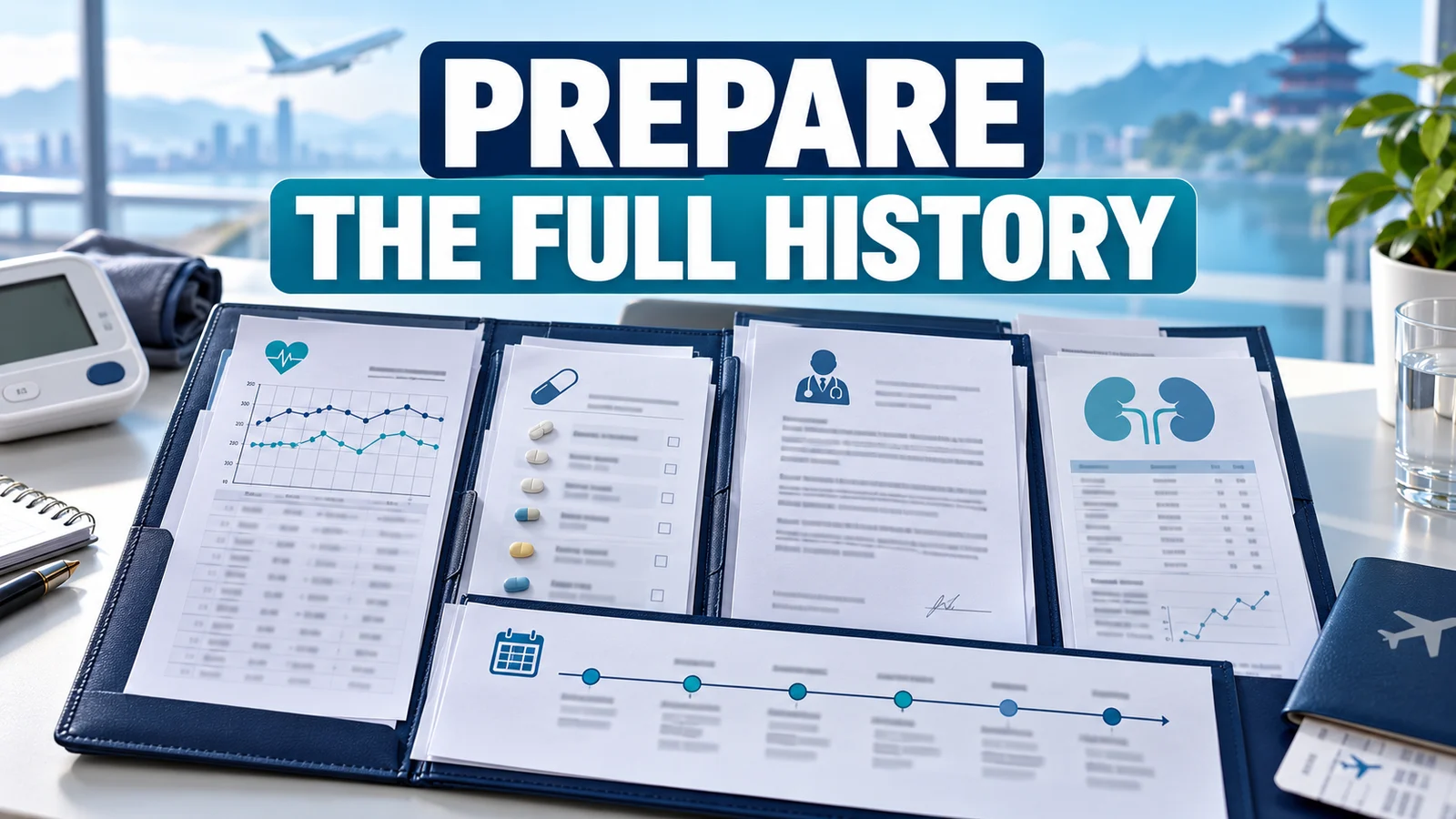
Create a One-Page Timeline for a Cross-Border Conversation
Before sending a large folder, create a chronological summary: when high blood pressure was first identified; important periods of control or higher readings; significant medicine changes; relevant admissions or evaluations; existing ambulatory-monitoring, kidney, vascular or cardiovascular reports; and the current treating clinician with the latest review date. Use factual language and label unknown dates as approximate.
Questions to Prepare Before Discussing Renal Denervation in China
- Which blood-pressure logs, device exports and clinic reports should be shared first?
- Does the facility need original monitoring reports, translations or an updated summary from my local clinician?
- Which parts of my medication and medical history are important to send, and what format does the facility accept?
- If prior kidney or vascular records are incomplete, what existing documents are still useful?
- What questions should I resolve with my local hypertension, cardiology, kidney or primary-care team before travel?
- What additional assessment, if any, would the receiving clinical team need before discussing options?
An invitation to provide records or an administrative reply does not decide suitability for renal denervation, confirm a device, establish a procedure date or replace care from your current clinical team.
Protect Privacy and Retain Originals
Blood-pressure logs and medication records can contain dates of birth, patient numbers, addresses, pharmacy details and other sensitive information. Send only records requested for the stated purpose through an agreed secure channel. Use clear filenames and keep an original copy plus a sharing copy. If translation is needed, send it with the source-language document so a reviewer can see provenance and dates.
What MedToChina Can and Cannot Do
MedToChina can help international patients organize existing blood-pressure records, a medication list and practical questions for a China-care service conversation. It does not diagnose hypertension, determine whether blood pressure is controlled, decide whether renal denervation is appropriate, alter prescriptions, interpret kidney or vascular results or promise availability of a procedure, device, hospital, doctor, appointment or outcome.
Frequently Asked Questions
Can I Tell From Home Readings Whether I Need Renal Denervation?
No. Home readings are valuable context, but determining whether any procedure is relevant requires qualified clinical assessment of measurement method, medication history, health factors and individual circumstances.
Should I Stop Blood-Pressure Medication Before Sending Records or Traveling?
No. Do not change prescribed treatment based on this guide. Discuss medicine questions with the clinician responsible for your care.
Do I Need New Kidney Imaging Before Contacting a China-Care Service?
Not automatically. Send records you already have and ask the receiving clinical team what it needs after reviewing history. Do not order tests solely from an online checklist.
Can MedToChina Tell Me Whether a Specific Device Is Available?
No. Device availability, clinical suitability and procedure decisions must be confirmed by the relevant facility and qualified clinical team.
Related MedToChina Resources
- Medical clearance before treatment in China
- China-ready medical records checklist
- China hospital admission and discharge guide
Send Your Records and Questions Through WhatsApp
Submit existing blood-pressure records and practical questions through WhatsApp. MedToChina can help organize a concise document list for a China-care service conversation. For symptoms that feel urgent or severe, seek appropriate local medical help rather than waiting for a travel-planning reply.
Medical Disclaimer
This article is general information, not medical advice, diagnosis, a treatment recommendation or a promise of care. It does not replace a clinical assessment or tell you to alter medicines. Seek urgent local medical help for urgent symptoms. Decisions about blood-pressure monitoring, tests, travel, renal denervation and other treatment must be made with qualified clinicians who know your condition.
References
- American Heart Association. Renal Denervation for the Treatment of Hypertension.
- American Heart Association. Top Things to Know: Renal Denervation.
- European Society of Cardiology. Renal denervation in hypertension.
- European Society of Cardiology. 2024 Hypertension Guidelines.