
Treatments
China Cancer Trial Eligibility Checklist for International Patients
Review diagnosis, biomarkers, prior therapy, health status and travel needs before China cancer trial screening. Pre-screening does not confirm enrollment.
MedToChina Editorial Team · 10 min read · September 23, 2026
Quick Summary
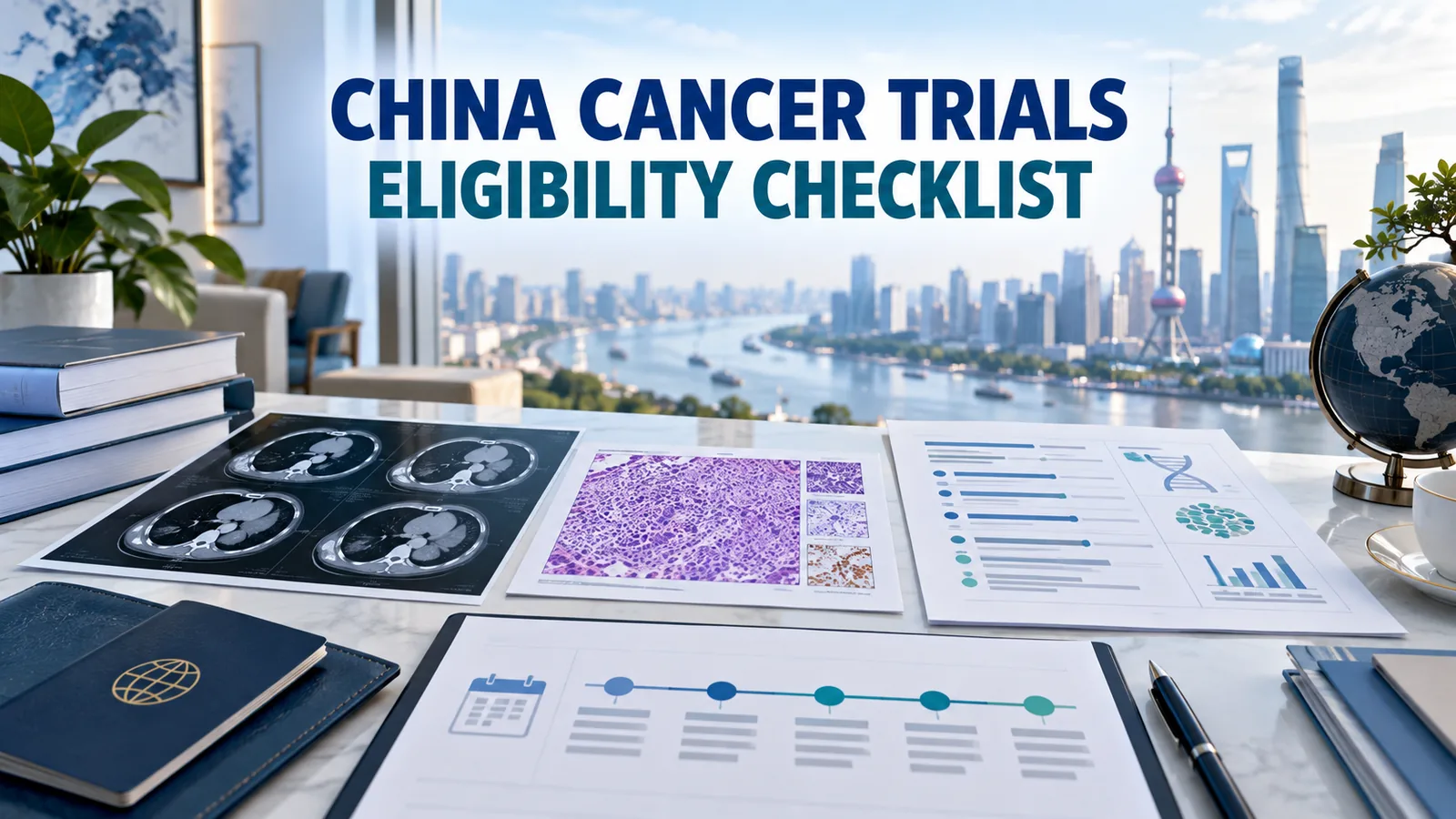
Every cancer clinical trial has its own protocol, inclusion criteria and exclusion criteria. A trial may require a precise cancer type, stage, biomarker, previous treatment, measurable disease, performance status, organ function and recovery from earlier therapy. Infection, certain medicines, uncontrolled medical conditions, pregnancy, travel limitations or inability to follow the visit schedule may affect eligibility. An online listing or encouraging pre-screening message does not confirm enrollment. International patients considering China should organize pathology, imaging, biomarker reports, a treatment timeline, recent laboratory results and practical travel details before deeper discussion. MedToChina accepts information and records through the website or WhatsApp; formal eligibility is determined only through the relevant study process.
Why eligibility needs a protocol-specific checklist
Clinical trial eligibility is not a general judgment that someone is “sick enough” or “healthy enough.” It is a comparison between one patient's current situation and one study protocol. ClinicalTrials.gov defines eligibility criteria as inclusion requirements that a participant must meet and exclusion reasons that prevent participation. [1]
Two trials studying the same cancer can use different criteria. One may require a particular mutation after two prior treatment lines. Another may exclude that mutation or require treatment-naive disease. One may allow controlled brain metastases; another may not. Laboratory limits, washout periods, age ranges, previous drugs and required visit schedules can also differ.
China's drug clinical trials operate under ethical review, informed consent and protocol requirements. The Drug Administration Law states that drug trials must follow ethical principles and be reviewed by an ethics committee. [2] Reviewed September 23, 2026. China's updated Good Clinical Practice for Drugs, effective September 1, 2026, further emphasizes participant protection, ethics review, principal-investigator responsibility and quality management. [3]
For international patients, the first task is to make the case accurately reviewable. MedToChina can help organize submitted information and clarify questions through WhatsApp. It does not decide whether a person qualifies for a study.
Check 1: Is the diagnosis documented precisely?
The trial team needs more than the word “cancer.” Eligibility may depend on the primary site, histologic subtype, grade, stage, metastatic sites and whether the disease is newly diagnosed, recurrent, refractory or progressing. A pathology report may need immunohistochemistry or molecular confirmation. Sometimes the trial requires central pathology review or a new biopsy.
Prepare the original biopsy or surgical pathology report, immunohistochemistry pages, operation note and any later pathology. State where and when the specimen was obtained. If the diagnosis has changed, explain why. If tissue blocks or unstained slides still exist, record where they are stored; do not ship specimens until the authorized process gives instructions.
A translated summary is helpful, but it cannot replace the complete original report. Keep specimen dates, tumor site, marker names and diagnostic wording accurate.
Check 2: Does the stage and current disease status fit?
A protocol may require locally advanced, metastatic, unresectable, relapsed or measurable disease. It may specify a staging system or require progression after a named therapy. A scan from many months ago may not show the current situation.
Prepare recent CT, MRI, PET-CT, bone scan or other disease-specific imaging. Send the written report and DICOM files when available. Build a simple table showing date, body region and main result. If a lesion has been treated with radiation or surgery, state that clearly because it may affect whether the lesion can be used for trial measurements.
Do not decide for yourself that a tumor is “measurable.” That judgment follows the protocol's imaging rules and the study team's review.
Check 3: Is the required biomarker proven by an acceptable test?
Many oncology trials now use biomarkers to define a study population. Examples can include a gene alteration, protein expression, microsatellite status, tumor mutational burden, viral marker or immune marker. The protocol may specify tissue versus blood, assay method, cutoff, specimen age or testing laboratory.
Send the complete biomarker or NGS report, including methodology, specimen source, collection date, tumor fraction where reported, variants and interpretation. Do not send only a screenshot of the positive line. If tissue and liquid biopsy results differ, include both and explain their dates.
A related biomarker is not automatically equivalent. For example, a pathway-level description or a family member's mutation may not satisfy a protocol requiring a precise tumor result.
Check 4: Does the prior treatment history fit?
Previous treatment is one of the most common reasons a trial may or may not be relevant. A study can require prior exposure to a drug class, documented progression on standard therapy, no previous use of a competing drug, or recovery from earlier toxicity. The sequence matters.
Create a treatment timeline with generic drug names, combinations, dose dates, surgery, radiation, ablation, cell therapy and previous trials. For each line, record the reason it started, the response, progression date, stop date and important side effects. Include ongoing medicines and any treatment planned before travel.
Some protocols use washout periods; others rely more on recovery and current clinical parameters. NCI guidance on modernizing eligibility recommends that time-based washouts be scientifically justified and that patients recover from clinically significant adverse events before enrollment. [4] The actual study protocol still controls the decision. Do not pause current treatment to create a washout period without guidance from the treating oncologist and study team.
Check 5: What is the current performance status?
Performance status describes how illness affects daily activity. Oncology trials often use ECOG or another scale. The protocol may require the patient to be fully active or capable of self-care and limited activity. The investigator assigns the formal score; a patient should describe function honestly rather than selecting a favorable number.
Explain how far you can walk, how much of the day you spend in bed or a chair, whether you need help bathing or dressing, and whether you use oxygen or mobility equipment. Mention recent changes. A score recorded before a hospitalization may no longer represent the current state.
Performance status is both a safety and feasibility issue. Some treatments require frequent visits, prolonged infusion, hospital admission or rapid reporting of adverse events.
Check 6: Are organ function and blood counts adequate?
Clinical trials commonly check bone marrow, liver, kidney, coagulation and electrolyte results. Some therapies also require heart tests, lung function, viral screening or other disease-specific assessments. There is no universal laboratory cutoff for all cancer trials.
Prepare recent complete blood count, liver and kidney tests, electrolytes and coagulation results, plus other relevant tests. Include units and reference ranges. State whether transfusions, growth factors, dialysis or other support affected the results. Screening tests may have to be repeated at the study site within a protocol-defined window.
Never alter a date or omit an abnormal result to appear eligible. Formal screening protects the patient and the scientific integrity of the study.
Check 7: Could another health condition exclude participation?
Depending on the treatment, exclusion criteria may address uncontrolled infection, significant heart or lung disease, active bleeding, recent clotting, autoimmune disease, organ transplant, uncontrolled seizures, symptomatic brain metastases or another active cancer. A condition that excludes someone from one study may be permitted in another.
Prepare a full medical history, recent hospitalizations, infection history, allergies and current symptoms. Include hepatitis, HIV or tuberculosis results when relevant and legally available. Explain whether brain metastases have been treated and whether steroids or anti-seizure medicines are required.
The investigator's judgment matters when the protocol uses language such as “clinically significant” or “uncontrolled.” A patient cannot settle those questions through a keyword search.
Check 8: Do medicines or supplements conflict with the protocol?
Steroids, anticoagulants, immune suppressants, anti-seizure drugs, antibiotics, herbal preparations and other medicines can affect safety, drug metabolism or trial endpoints. A protocol may restrict a medicine because of interaction or overlapping toxicity.
Provide one current list with generic name, dose, route, frequency and reason for use. Include non-prescription products, supplements and traditional medicines. Ask before stopping anything. Sudden withdrawal can be dangerous and may not improve eligibility.
Check 9: Are consent and reproductive requirements understood?
Research participation is voluntary. China's Drug Administration Law requires trial objectives and risks to be explained and informed consent to be signed voluntarily. [2] Consent is a process; it does not confirm enrollment or waive participant rights.
Some protocols require pregnancy testing and contraception for participants or partners because the investigational treatment may create reproductive risk. Pregnancy and breastfeeding may be exclusion criteria. Requirements differ by protocol and treatment. Ask how long precautions continue after the last dose.
International patients should ask how the consent discussion will be provided in a language they understand. An interpreter may support communication, but key research documents and the site's approved consent process govern participation.
Check 10: Can an international patient complete the schedule?
Medical eligibility alone may not make participation practical. A trial may require repeated visits, fixed imaging dates, hospital stays, laboratory monitoring, biopsy, emergency contact availability and long-term follow-up. International travel, visa timing, accommodation, companion support and return-home care can affect feasibility.
Practical travel burden, scheduling, language support, unexpected screen failure and return-home continuity should all be raised directly with the study coordinator. These issues do not define medical eligibility, but they can determine whether participation is feasible. The current protocol and study team remain the authoritative sources.
Before travel, ask which study costs are covered and which routine care, travel, lodging, translation or complication costs remain the patient's responsibility. The NCI notes that research sponsors, insurance and patients can cover different categories of costs and recommends asking the study coordinator for details. [5] China trial arrangements and international insurance terms must be checked case by case.
Pre-screening, consent, screening and enrollment
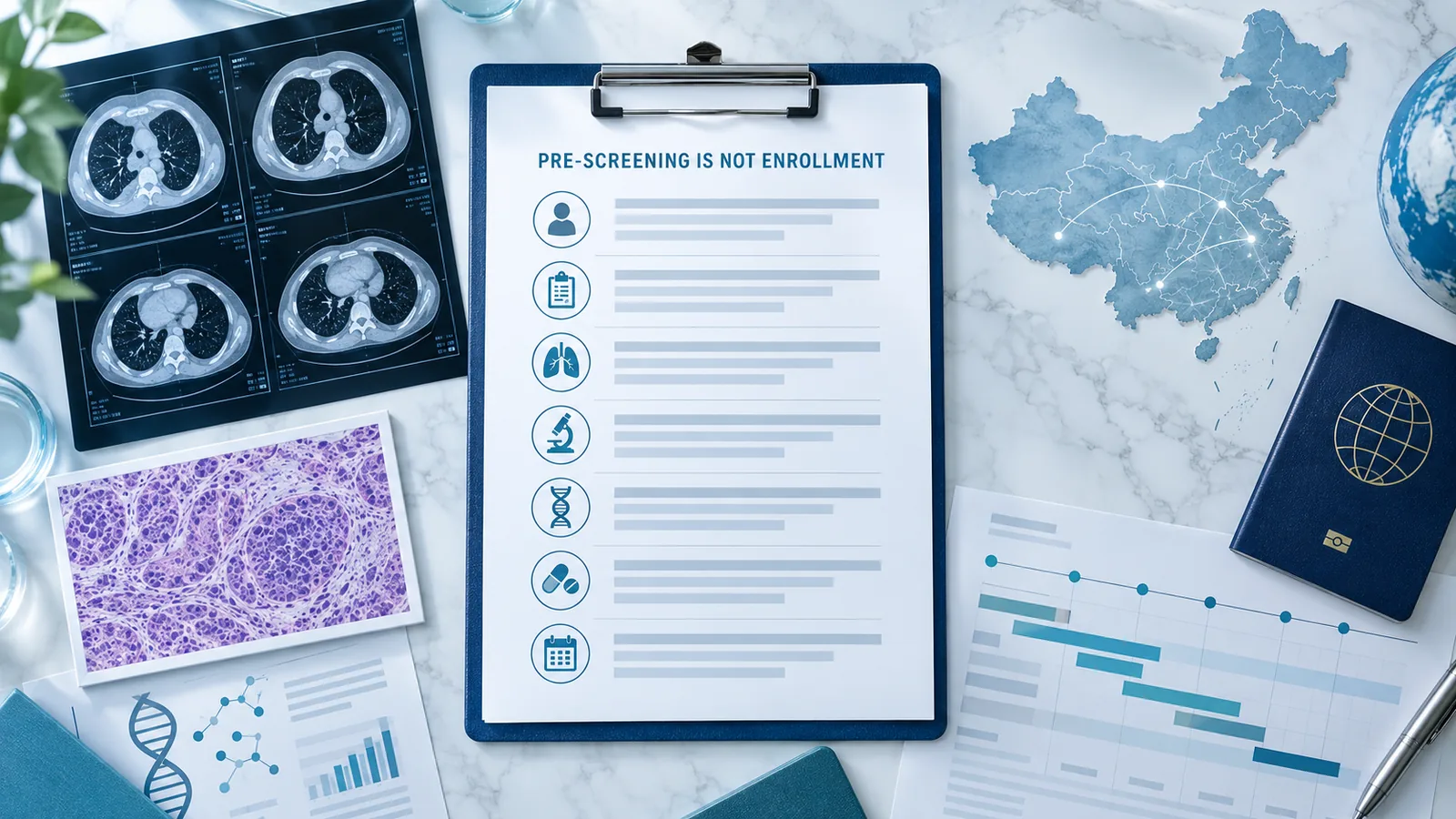
These stages should not be merged. Pre-screening is an early review of records and basic criteria. It can show that a trial may be relevant, but incomplete records or changing status can affect the result.
Informed consent explains the purpose, procedures, risks, alternatives, schedule, rights and other trial details. Signing allows protocol-defined screening to proceed; it does not confirm that all criteria are met.
Formal screening may include medical history review, examination, laboratory tests, imaging, ECG, pathology or biomarker confirmation. NCI describes screening as more thorough than pre-screening and notes that medical history or test results may make a person unable to participate. [6]
Enrollment occurs only after the study process confirms eligibility and other requirements. A study listing can also change from recruiting to closed, suspended or completed. ClinicalTrials.gov advises patients to review status, eligibility, contacts and locations, while noting that a listing may not always reflect the latest site situation. [7]
What to send through WhatsApp
Send a concise message with age, nationality, current country, cancer type and stage, latest pathology, key biomarkers, current symptoms, performance status description, prior treatment lines, current therapy, latest imaging date, recent laboratory date and possible travel month.
Attach a one-page cancer summary, pathology, biomarker reports, imaging reports, treatment timeline, recent labs, medication list and relevant discharge summaries. Organize files by date and category. MedToChina can help clarify missing information and prepare practical questions for later discussion about China medical resources.
Do not stop treatment, book irreversible travel or assume trial access based on an online listing or early message.
FAQ
Does meeting every visible online criterion confirm eligibility?
No. Public summaries may be incomplete, the protocol may have additional details, and formal screening may identify new information. The investigator and study process make the final determination.
Can international patients enter cancer clinical trials in China?
Some studies may consider them, while others may have protocol, language, regulatory, insurance or follow-up limits. This must be checked with the relevant study process.
Can I be screened again after a screen failure?
Sometimes a protocol may permit rescreening if a temporary issue resolves, but this is study-specific. Ask the study team and disclose the previous screening result.
Is a biomarker report enough?
Usually not. Eligibility may also depend on pathology, stage, measurable disease, prior treatment, performance status, organ function, medicines and other conditions.
Should I stop treatment while waiting for a trial review?
Do not stop or change treatment without guidance from your treating oncologist and the relevant study team. Delay can be harmful and may not create eligibility.
What does MedToChina do at this stage?
MedToChina accepts basic information and records and supports WhatsApp communication. Formal trial eligibility, consent, screening and enrollment remain with the authorized clinical research process.
Related MedToChina Resources
- Investigational cancer drugs and trial pre-screening records
- Cancer mutation reports and targeted therapy questions
- China-ready medical records checklist
- CAR-T pre-screening record preparation
- Medical clearance before treatment in China
WhatsApp CTA
Considering a cancer clinical trial discussion in China? Submit your basic information or send your one-page cancer summary, pathology, biomarker report, treatment timeline, recent imaging and laboratory results to MedToChina on WhatsApp. Include your current country, possible travel month and practical concerns so the next conversation starts with a complete checklist.
Medical Disclaimer
This article is for general education and planning only. It does not provide diagnosis, treatment advice, trial selection, eligibility confirmation, enrollment, legal advice or assurance that a study or medical service will be available. Clinical trial criteria, status and procedures can change. Patients should consult their treating oncologist and the authorized study team before changing treatment or travel plans.
References
- ClinicalTrials.gov. Study Basics: Eligibility Criteria.
- National Medical Products Administration. Drug Administration Law of the People's Republic of China.
- National Medical Products Administration. China updates drug clinical trial guideline to enhance biotech innovation.
- National Cancer Institute. Expansion of Clinical Trial Eligibility Criteria.
- National Cancer Institute. Who Pays for Clinical Trials?.
- National Cancer Institute. Clinical Trials: What to Expect.
- ClinicalTrials.gov. How to Join a Study.