
General
Medical Treatment in China: A Six-Step Planning Pathway for International Patients
Follow six practical steps for planning medical treatment in China, from records and travel preparation to hospital care and return-home follow-up.
MedToChina Editorial Team · 8 min read · October 11, 2026
Quick Summary
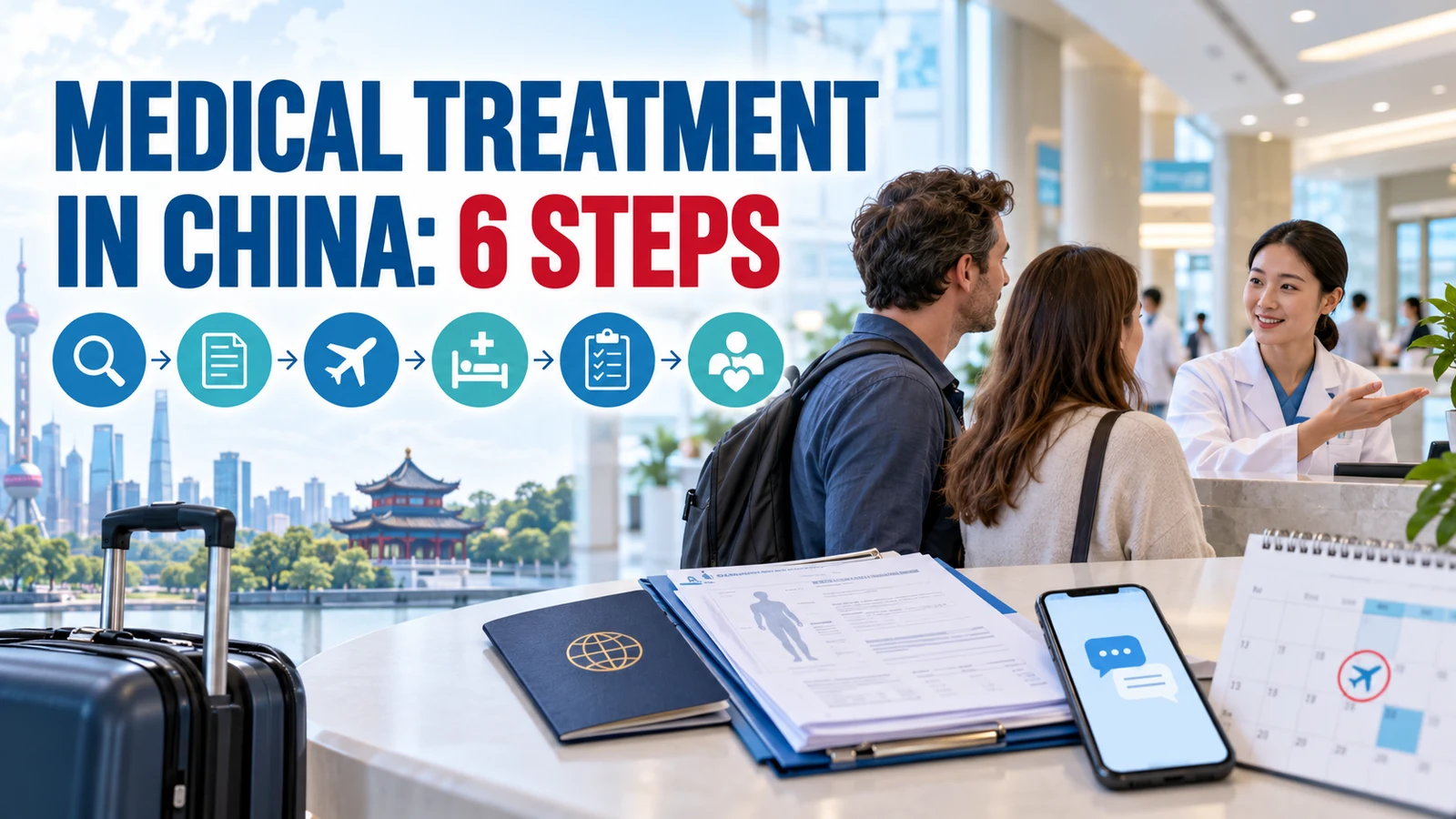
Planning medical treatment in China is not one booking or one hospital visit. It is a sequence: define the medical question, organize records, clarify the practical pathway, prepare travel, complete hospital care and transfer information back to the doctor at home. Each step reduces a different risk. A clear diagnosis summary makes communication more useful; a complete medicine list improves safety; a realistic stay plan prevents premature flights; and a discharge record package supports follow-up after the patient returns home. This guide explains the pathway for overseas patients considering China. It does not diagnose, recommend a named hospital or promise access, timing, price or outcome.
Reviewed October 11, 2026.
Why a Six-Step Plan Helps
Overseas patients often start with a single urgent question: “Can China treat this condition?” The more useful starting point is usually more specific: What is the diagnosis? What has already been tried? Which decision needs to be made? Is travel medically realistic? What follow-up will be needed at home?
China has large public tertiary hospitals, international departments within some public hospitals, private hospitals and specialty centers. Service language, payment methods, registration process, documents and inpatient support vary by city, institution, department and clinical situation. Official Beijing and Shanghai guidance shows that multilingual services, international medical documentation and commercial-insurance arrangements may be available in selected settings, but should never be assumed across every visit or department.
The six steps below do not replace medical judgment. They give patients a safer way to prepare before flights, deposits or treatment commitments are made.
Step 1: Define the Question and the Care Goal
Start with a one-page summary in plain language. Include the diagnosis or suspected diagnosis, main symptoms, how long the problem has been present, what currently limits daily life, previous treatment and the question you want answered.
The question may be about treatment options, procedure planning, a complex diagnosis, a treatment pathway unavailable at home, a travel-compatible checkup or a second-stage treatment after previous care. Do not turn a broad concern into a claim that one procedure is necessary. A clinician must decide whether a treatment is appropriate after reviewing the complete case.
Useful questions include:
- What information is still missing before a China care discussion can be meaningful?
- Is this mainly a consultation, test, procedure, inpatient treatment or follow-up question?
- Which parts of care must be done before travel, in China and after returning home?
- What symptoms or changes would make travel unsafe or require urgent local care?
This first step also helps a caregiver explain the same situation consistently to the home doctor, insurer and receiving service team.
Step 2: Build a China-Ready Medical Record Pack
The best record pack is complete enough to show the clinical story but organized enough to be reviewed. Keep original documents and translations together. Use searchable PDF files where possible and retain original DICOM imaging files, not only screenshots.
For most conditions, the starting pack includes:
- Diagnosis summary and recent clinic letters
- Laboratory, pathology and procedure reports when relevant
- Imaging reports and DICOM files
- Treatment timeline with dates, medicines, cycles, operations or admissions
- Current medication list: generic name, brand, strength, dose, schedule and reason
- Allergies, prior adverse reactions and important medical conditions
- Operative, anesthesia, implant or device records when relevant
- Passport country, preferred language, travel window and caregiver contact
For cancer care, pathology, staging, molecular reports, prior treatment response and current scans are often central. For surgery, imaging, operative history, functional limits and medical clearance may matter. For chronic disease, disease control, medicine response and complications may be important. Send only what is needed through a secure channel and remove unrelated information where possible.
Step 3: Clarify the Practical Pathway Before Booking Travel
The next goal is not to obtain a promise. It is to identify missing information and practical requirements. A receiving institution may need updated imaging, new laboratory tests, pathology materials, infection screening, anesthesia clearance, a caregiver plan or a longer in-China stay than initially expected.
Use the website form or WhatsApp to submit the diagnosis summary, relevant records, preferred city or travel constraints, language needs and questions. MedToChina can identify missing information and explain practical preparation steps after understanding the patient's submitted planning needs. Clinical decisions remain with the receiving institution and licensed clinicians.
Ask for clarity on:
- What records are needed before further communication
- Whether a planned visit is outpatient, inpatient or staged
- Which language support, if any, can be requested
- How estimates, deposits, insurance and receipts are handled
- What the patient should bring on arrival
- Whether a companion is advisable or required
- Which discharge documents and follow-up instructions may be available
Avoid booking non-refundable travel when medical and operational requirements are still uncertain. A record review, appointment discussion or deposit request is not the same as a confirmed treatment plan.
Step 4: Prepare Travel, Payment and Communication Safely
Travel planning should follow the clinical plan, not lead it. Ask the treating doctor at home whether travel is safe in light of the patient's current condition, mobility, oxygen needs, infection risk, medicines and the proposed procedure. The CDC advises travelers to bring records, keep prescription and over-the-counter medicines in original packaging, carry an accurate medicine list, and arrange follow-up care before leaving home.
Keep these items in hand luggage:
- Passport, visa or entry documents, and admission or appointment details
- Key medical records and secure digital backups
- Regular medicines, prescriptions and allergy list
- Emergency contact and caregiver information
- Insurance details, preauthorization information and payment backup
- Hospital address and contact route in English and Chinese if provided
Payment processes vary. Beijing's official guide lists several payment methods and explains that direct billing depends on a specific insurer-institution arrangement. Confirm the relevant department, coverage limits, deposit requirement and reimbursement paperwork with both the insurer and the hospital. A cost estimate is a planning tool, not a fixed final amount.
Step 5: Participate Actively During Hospital Care
On arrival, verify the hospital campus, department, patient identity details and planned service. Large institutions may have more than one campus or service channel. Tell the team about language needs, allergies, current medicines, mobility limitations and relevant religious or dietary needs.
For important conversations, ask for plain language and suitable interpretation when available. This includes diagnosis discussions, consent, medicine changes, procedures and discharge instructions. A translated form alone does not prove understanding. Teach-back is useful: the patient or caregiver repeats the plan in their own words so misunderstandings about a drug dose, preparation instruction, date or warning sign can be corrected.
Keep a simple daily record of new tests, medicine changes, procedures, questions, payment notices and pending results. Do not take personal medicines during an inpatient stay unless the care team has reviewed and recorded them. Ask the team how to obtain official copies of reports and images.
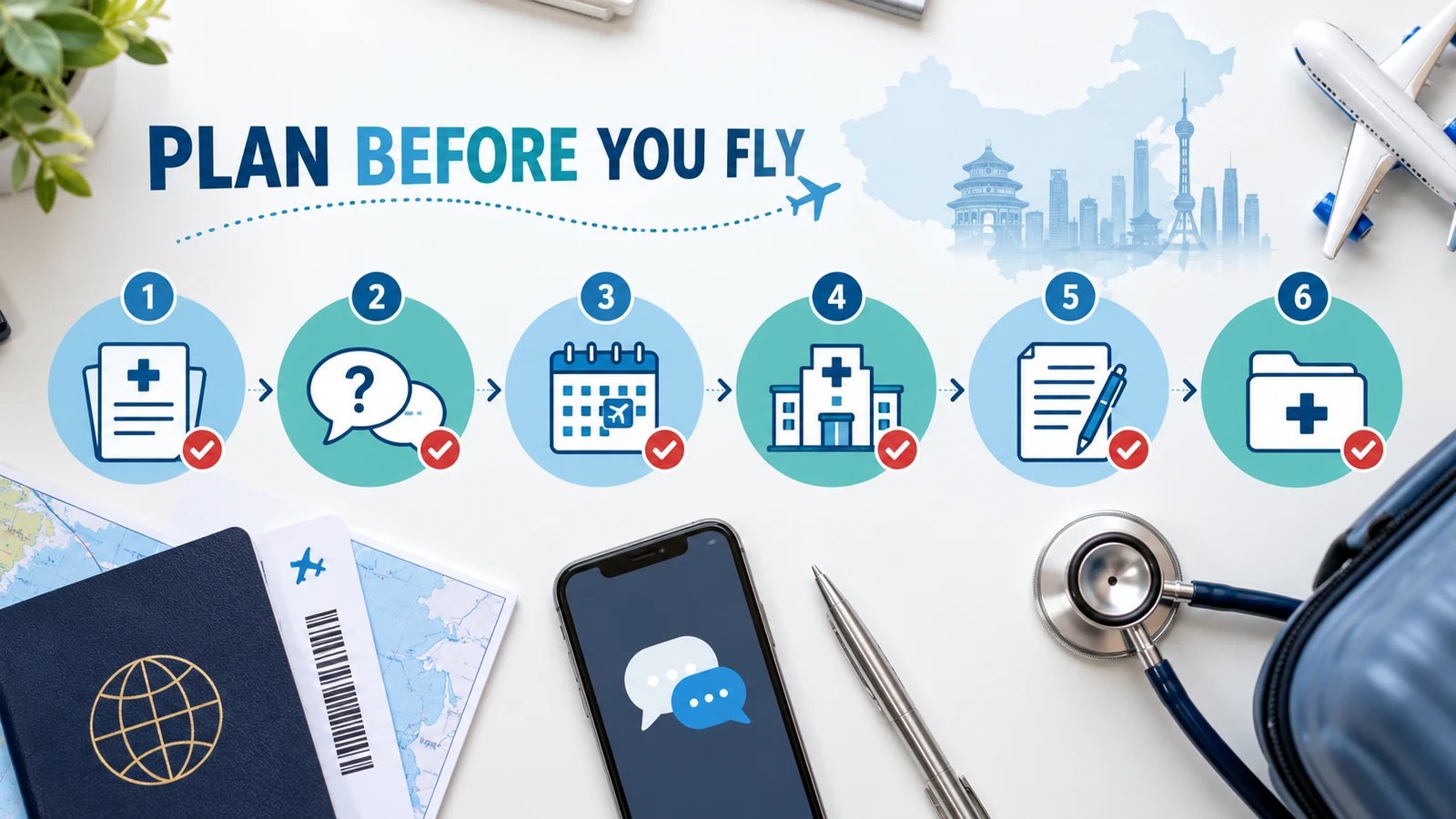
Step 6: Leave China With a Follow-Up Plan, Not Only a Flight Booking
The medical journey continues after discharge. Before returning home, confirm the final diagnosis, procedures completed, medicines to start or stop, wound or device care, activity limits, warning signs, pending results and the correct route for urgent care.
Request the documents needed by the next clinician. Depending on the case, these may include:
- Discharge summary and hospital course
- Procedure, operation or anesthesia report
- Pathology, laboratory and imaging reports
- DICOM image files
- Reconciled medication list and prescriptions
- Implant or device details
- Follow-up plan, care instructions and contact route
- Itemized bill, official invoices and receipts
CDC guidance recommends obtaining medical records before returning home and arranging follow-up in the home country. Do not assume a discharge date automatically means fitness for a long flight. Travel timing depends on the diagnosis, procedure, recovery, complications, mobility and treating team's advice. For acute or worsening symptoms, seek urgent local care rather than waiting for an international response.
How MedToChina Fits Into the Pathway
MedToChina helps overseas patients organize practical information for a medical journey to China. Patients can submit records and questions through the website or WhatsApp, including diagnosis, key reports, country of residence, intended travel period, language needs and practical concerns. The team can then identify missing information and explain practical preparation steps.
MedToChina does not provide a medical diagnosis through the website, make a treatment decision, promise acceptance or outcome, or publicly select a hospital or doctor for a patient. Admission, clinical care, payment and discharge decisions are confirmed by the relevant medical institution and licensed clinicians.
Frequently Asked Questions
Do I need a confirmed diagnosis before planning treatment in China?
Not always, but the available evidence must be clear enough for the actual question. Bring all existing reports, scans and symptom history. The receiving institution may request further testing before it can discuss a clinical path.
Should I book flights before sending my records?
For complex, invasive or inpatient care, it is usually safer to organize records and clarify practical requirements first. Missing pathology, imaging, clearance or bed-related steps can change timing.
Can I assume English support is available?
No. Some institutions and international services provide multilingual support, but availability differs by hospital, department, language, shift and type of care. Confirm the exact support needed.
What should I bring home after treatment?
At minimum, request a discharge summary, procedure or test reports, pathology or imaging results, DICOM files when relevant, a medication list, prescriptions, follow-up instructions and payment documents.
Does a cost estimate include every expense?
Not necessarily. Tests, medicines, room type, procedure complexity, length of stay, complications, travel and post-discharge care can change the total. Ask what is included, excluded and refundable.
Related MedToChina Resources
- China-ready medical records checklist
- Medical clearance before treatment in China
- China hospital prepayment guide
- China hospital admission and discharge guide
- Language support in Chinese hospitals
Submit Your Information or Contact Us on WhatsApp
Planning medical treatment in China? Submit your diagnosis summary, key records, current medicines, preferred travel period, country of residence and questions through MedToChina, or contact the service team on WhatsApp. The team can identify missing information and explain practical preparation steps after understanding your submitted planning needs.
Medical Disclaimer
This article provides general educational and travel-preparation information. It is not medical advice, diagnosis, financial advice or a treatment recommendation. Clinical eligibility, hospital processes, language support, payments, deposits, travel fitness and follow-up needs vary. Confirm decisions with the relevant medical institution, insurer and qualified clinicians. Seek urgent local medical care for an emergency or rapidly worsening symptoms.
References
- Beijing Municipal Government. Medical Guide for Foreigners in Beijing.
- Shanghai Municipal Government. Implementation Opinions on Promoting International Medical Innovation and Development.
- U.S. Centers for Disease Control and Prevention. Medical Tourism: Travel to Another Country for Medical Care.
- U.S. Centers for Disease Control and Prevention. Medical Tourism, Yellow Book.
- Agency for Healthcare Research and Quality. Use the Teach-Back Method.
- World Health Organization. Communication During Patient Hand-Overs.