
Visa & Travel
Food Preferences and Allergies During Hospital Stays in China: Questions to Confirm
A practical guide for international patients to communicate food allergies, religious or cultural preferences, and clinical diet instructions during a hospital stay in China.
MedToChina Editorial Team · 11 min read · November 10, 2026
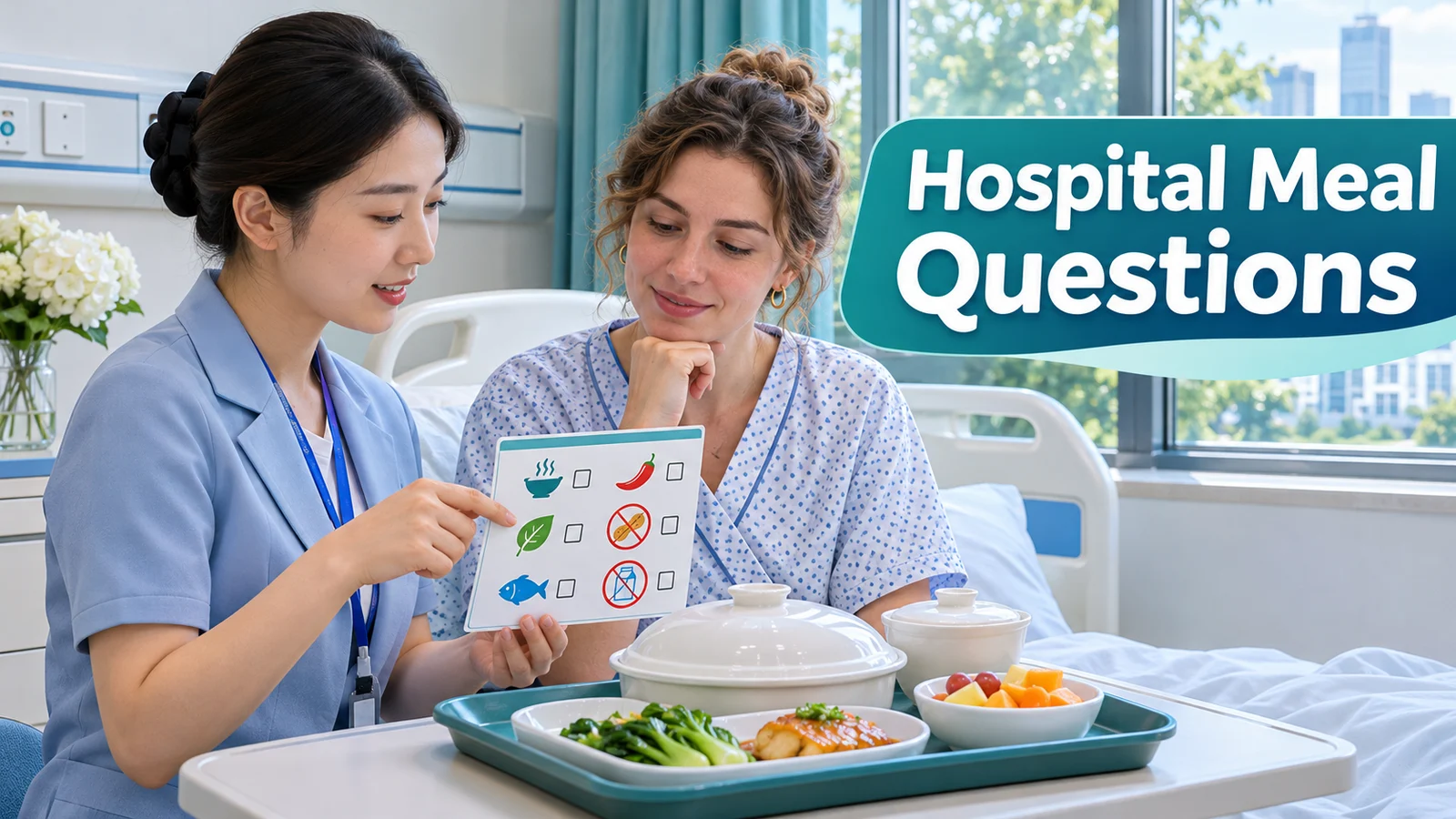
Quick Summary
- A food preference, a food allergy, an intolerance, and a clinically prescribed diet are not the same request. State each separately when you are admitted.
- Before travelling to China for inpatient care, ask the relevant hospital through an official channel which ward team handles meal questions, what information to bring, and whether family-brought food is permitted.
- Give a short, factual list: the food or ingredient, the type of need, the language used on your existing allergy or diet documents, and a contact who can clarify the history if needed.
- Do not assume a hospital can provide halal, kosher, vegetarian, vegan, allergen-free, texture-modified, or other specific meals. Availability, ingredients, preparation, and outside-food rules differ by hospital and clinical circumstance.
- A clinical team may set instructions such as fasting, a restricted diet, swallowing precautions, or a nutrition plan. Those instructions take priority over a personal preference, and only the treating team should explain or change them.
Food is often a practical concern for an international patient planning a hospital stay in China. Families may ask whether a religious diet can be accommodated, whether a familiar food can be brought in, or how an allergy is communicated when the patient does not speak Chinese. These are sensible questions, but they need careful wording because the consequences and responsible teams differ.
This guide helps you prepare a clear conversation with a hospital. It does not provide a meal plan, decide whether a reaction is an allergy, advise on fasting, prescribe nutrition, or promise a particular meal. The relevant ward, food-service, dietetic, and clinical teams are the sources for current procedures and patient-specific directions.
Begin by separating four different kinds of food information
Putting every food concern under the word “diet” can lead to misunderstanding. Before admission, make separate headings for the following.
1. Cultural, religious, or personal preferences
This may include vegetarian or vegan eating, avoidance of pork or alcohol, halal or kosher needs, a preferred cuisine, or foods a patient does not normally eat. These requests matter for comfort and dignity, but are not automatically clinical orders. A hospital may not provide a dedicated certified menu, separate preparation area, familiar brands, or every preferred ingredient.
Describe the request plainly: “I do not eat pork for religious reasons,” or “I prefer vegetarian meals.” Avoid presenting a preference as an allergy. That distinction helps the hospital understand what needs an urgent safety response and what requires a practical availability discussion.
2. Known food allergies
A food allergy is not the same as disliking a food or having digestive discomfort after eating it. The NHS notes that food allergy can range from mild symptoms to serious reactions.[^1] If you have a documented allergy, write the food or ingredient and wording used in existing records. Bring the original document and a clear translation where available.
Do not self-label a new symptom as an allergy in order to obtain a menu change. If your history is uncertain, say that it is uncertain and ask the clinical team how the hospital wants it recorded. The hospital, not an article or a coordinator, determines its own allergy documentation and food-service process.
3. Intolerances and other non-allergic restrictions
An intolerance, coeliac disease, a digestive symptom, or another food-related restriction may need discussion but has a different clinical and catering context from an immediate allergy. Be specific about the existing diagnosis or instruction without asking a registration or kitchen contact to diagnose the cause. If a clinician has already supplied written advice, bring that document. If not, ask the treating team which member of staff should receive the question.
4. Clinician-directed diets and fasting instructions
Some patients may receive instructions connected to a procedure, examination, swallowing safety, blood-sugar management, kidney care, nutrition support, or another clinical issue. These are clinical instructions, not preferences. A hospital may change meal access or timing for a patient-specific reason. Do not use a general article to decide whether to eat, drink, fast, bring supplements, or change a prescribed diet. Ask the responsible ward or clinical team for the current instruction.
Ask the right hospital contact before and on admission
The relevant contact can differ by stage of care. Before travel, an international-patient desk or published hospital contact may explain what information is useful to bring and whether the hospital has a general policy on outside food. After admission, the ward team normally needs to know the patient's current needs. A dietitian, food-service team, or clinician may become involved when the question concerns a clinical diet.
Use focused questions:
- Which official contact can explain inpatient meal and food-communication procedures for this hospital and ward?
- When should the patient declare a documented food allergy, intolerance, cultural or religious preference, or pre-existing clinical diet instruction?
- Is there a form, admission interview, or bedside process for recording the information?
- Which team should answer a question about a clinician-directed diet or feeding restriction?
- What is the hospital's current policy on food brought by visitors or family members?
- If a patient needs language support to communicate food information, which official channel should be used?
- Who should be told if the patient's recorded need appears missing, incorrect, or changes during the stay?
Large hospitals in Beijing, Shanghai, Guangzhou, and other cities may have different procedures across campuses, wards, and departments. A general website page or an answer from another unit may not apply to your ward. Record the campus, building, department, date, and contact alongside any answer.
Make a concise food-information card
A short, patient-owned note can reduce repeated explanations at admission. It should help communication, not replace a hospital's medical record or its own labels. Keep it factual, dated, and easy to show to an appropriate staff member.
- Section: Patient identification; What to include: Patient name as shown on travel and hospital documents; What not to assume: That a companion's identity can replace the patient's
- Section: Allergy history; What to include: Exact food/ingredient and wording from existing records; What not to assume: That every food concern is an allergy
- Section: Intolerance or condition; What to include: Existing diagnosis or clinician document, if any; What not to assume: That ward staff will make a new diagnosis
- Section: Preference; What to include: Cultural, religious, vegetarian, vegan, or other stated preference; What not to assume: That a particular certified meal or ingredient is available
- Section: Clinical instruction; What to include: A current written instruction from the treating team; What not to assume: That an old diet plan still applies after admission
- Section: Communication; What to include: Preferred language and a family contact if permitted; What not to assume: That the family contact can change a clinical order
- Section: Clarification; What to include: Date, hospital contact, and questions still unanswered; What not to assume: That an unanswered item is confirmed
Do not put your full passport number, payment details, passwords, or unrelated medical history on a card shared widely. Give detailed medical records through an appropriate hospital channel when requested. If the patient has a severe allergy history, bring the relevant patient-specific medical documents and discuss the hospital's process directly with the ward team.
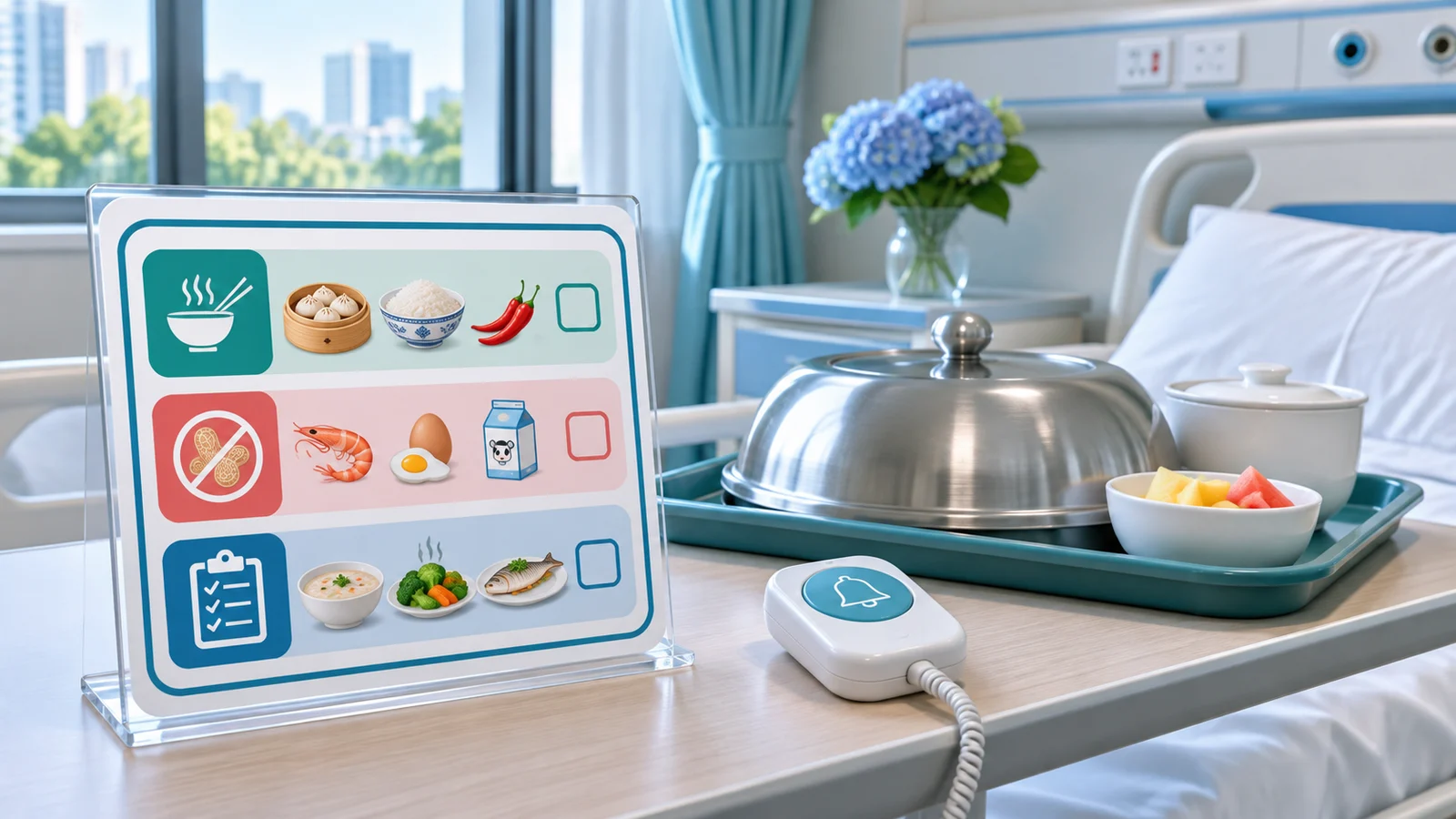
What to confirm about meals without making promises
It is reasonable to ask a hospital what it can currently confirm. A broad answer is not a promise. NHS England food standards emphasize early communication among nursing, dietetic, and food-service teams and distinguish allergy processes from other dietary needs.[^2]
Ask whether the hospital can explain:
- who receives the food information at admission and whether it reaches the meal-service team;
- what menu information, ingredient information, or staff contact is available for the ward;
- whether a request is being recorded as a preference, allergy, intolerance, or clinical diet instruction;
- whether any part of a request requires a dietitian or treating clinician;
- the policy for food supplied by visitors, deliveries, supplements, snacks, or sharing food between patients;
- what to do if a tray arrives that does not appear consistent with the information you provided.
Do not assume that “vegetarian” means vegan, that “no pork” means halal-certified, that “allergy-aware” means every allergen has been eliminated, or that a familiar food brought from outside is clinically appropriate. Food-service policies can also be affected by infection-control rules, procedure preparation, storage limits, swallowing safety, medication schedules, or a temporary clinical restriction.
Outside food, supplements, and shared meals
Families often want to bring comfort foods during a hospital stay. Some hospitals may allow certain food; others may restrict it for safety, storage, infection-control, or clinical reasons. A patient may also be fasting or following a temporary clinical instruction. Ask before bringing food, drinks, nutritional supplements, herbal products, or a shared meal to the ward.
Useful questions are: “Is visitor-brought food permitted on this ward?” “Who should check it if the patient has a documented allergy or a current diet instruction?” and “Should we tell the ward about any supplement or packaged food?” Do not conceal food because a patient is unhappy with a menu. If there is a concern about nutrition, appetite, swallowing, nausea, or an inability to eat, tell the treating team.
Do not share food with another patient. Their allergies, diet orders, procedure preparation, and infection-control needs may be different. A hospital's answer about outside food is an administrative and clinical-safety boundary, not a judgment about the patient's culture or family.
If a meal seems inconsistent with the information provided
Pause before eating or serving the food if it appears inconsistent with a documented allergy, a clinical instruction, or a clearly communicated restriction. Use the ward's designated call method and state the issue calmly: the patient's name or bed location as appropriate, the concern, and what was previously recorded. Ask which staff member can verify the tray or clarify the instruction.
Do not try to identify ingredients by appearance, translate labels through a generic app as the sole check, or ask another patient to decide whether a food is safe. Cross-contact and ingredient questions require the hospital's own process. For a suspected allergic reaction or any urgent symptom, alert ward staff immediately. If you are not in a hospital, seek emergency help locally. This guide does not replace a patient-specific emergency plan.
Communication across languages
Translation can support understanding, but it does not turn an informal note into a medical order. Use simple, consistent wording. Show the original allergy card or clinician letter where relevant, and ask the ward who has recorded the information. If an interpreter or language-support contact is available through the hospital, ask how to use it for the admission conversation.
MedToChina can help international patients organize a clear list of non-sensitive questions before communicating with a China hospital. We can help distinguish the questions that belong to administration, food service, and the clinical team. We do not certify meals, approve outside food, interpret allergies, prescribe diets, or alter hospital instructions.
A practical admission checklist
Before travelling, prepare:
- A short list that separately identifies preferences, documented allergies, intolerances, and clinician-directed diet documents.
- Copies of relevant patient-specific allergy or diet records in the original language and, where useful, a clear translation for reference.
- The hospital, campus, ward or expected department, travel dates, and official contact response.
- A question about the hospital's outside-food and supplement policy.
- A day-of plan to tell the ward team on admission and to ask which staff member owns any unresolved question.
On the ward, repeat the essential information during admission rather than assuming a pre-travel message has reached every team. Confirm what has been recorded and who to contact if it needs correction. Mark anything not confirmed as “pending” rather than making an assumption.
FAQ
Can I request halal, kosher, vegetarian, vegan, or another religious or cultural diet at any hospital in China?
You can ask, but availability, certification, ingredients, preparation, and ward procedures vary. Ask the specific hospital what it can confirm for the planned stay; do not treat a general statement as a guarantee.
Is a food intolerance the same as a food allergy for hospital communication?
No. Use the most accurate wording from existing records and state whether the issue is a diagnosed allergy, an intolerance, a preference, or a clinical instruction. The hospital decides how it documents and manages the information.
Can my family bring food from outside the hospital?
Ask the ward first. Policies can vary with the patient's condition, procedure preparation, storage, infection-control requirements, and hospital rules. Do not bring food or supplements as a substitute for a current clinical instruction.
What should I do if the tray seems wrong?
Pause before eating and alert the ward team through its designated call method. Ask the relevant staff member to verify the tray or the current instruction. For a suspected reaction or urgent symptom, seek immediate help from ward staff or local emergency services.
Can MedToChina guarantee an allergen-free or religiously certified meal?
No. We can help you prepare questions for the official hospital channel. Only the relevant hospital can explain its current food-service procedures and any applicable clinical limits.
WhatsApp CTA
Planning an inpatient stay in China with food preference, food allergy, or diet-communication questions? Submit your information or send your non-sensitive questions through WhatsApp. MedToChina can help you organize a clear checklist for the relevant hospital teams.
Medical Disclaimer
This article provides general administrative communication guidance for international patients considering hospital care in China. It is not medical, nutrition, allergy, nursing, emergency, legal, religious-certification, or food-safety advice. It does not diagnose food allergy or intolerance, prescribe a diet, give fasting instructions, confirm meal ingredients, guarantee an allergen-free or religiously certified meal, or replace directions from the treating team. Hospital policies and clinical instructions can change. For an urgent reaction or emergency, alert local clinical staff or seek local emergency care immediately.
Related Guides
References
[^1]: NHS. Food allergy. [^2]: NHS England. National standards for healthcare food and drink. [^3]: Cambridge University Hospitals NHS Foundation Trust. Inpatient dietetic services. [^4]: University Hospitals Bristol and Weston NHS Foundation Trust. Food service during a hospital stay. [^5]: Food Allergy Research & Education. Dining out.