
Treatments
SMILE vs LASIK vs ICL in China: Which Vision Correction Option Fits You?
Learn what international patients should know about SMILE, LASIK and ICL decision-making in China in China, including preparation, costs, scheduling, travel considerations, WhatsApp communication, and medical safety questions.
MedToChina Editorial Team · 6 min read · June 20, 2026
Quick Summary
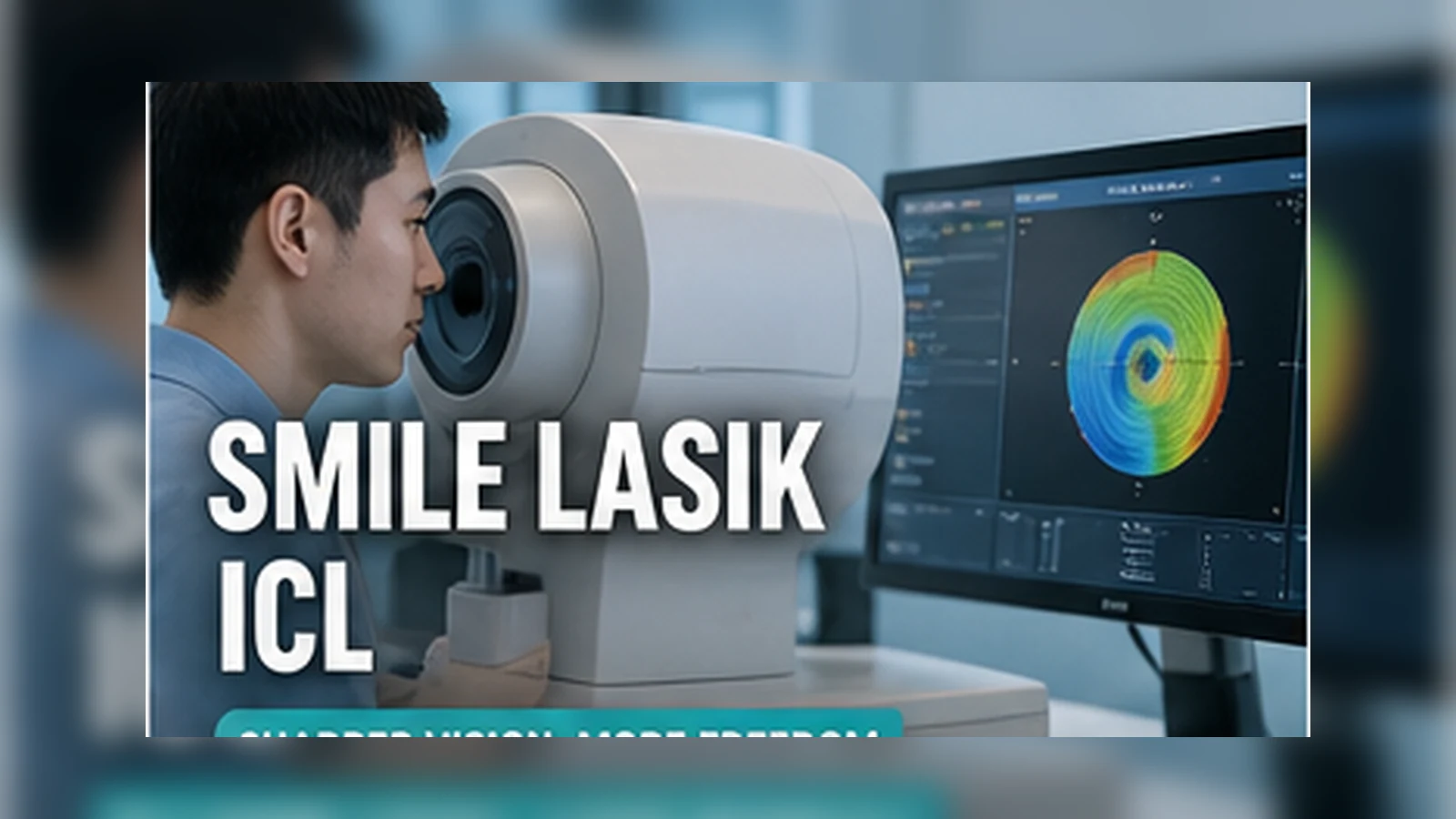
SMILE, LASIK, Femto-LASIK, PRK, and ICL are different ways to reduce dependence on glasses or contact lenses. For international patients considering vision correction in China, the right question is not which procedure is newest. It is which option fits the eyes, prescription, lifestyle, and risk profile.
This article is written for foreign patients and overseas families considering medical care in China. It explains what to prepare, what questions to ask, how China may be considered, and how to use WhatsApp communication with MedToChina without treating the website as a diagnostic or treatment platform.
Patient Problem and Search Intent
Patients often compare procedures using online stories about dry eye, halos, night vision, high myopia, and recovery speed. The decision should be based on testing, not marketing. A complete preoperative exam is essential before any refractive procedure is discussed.
For MedToChina, this page should support two actions: the patient can submit basic information, or the patient can send medical records and questions through WhatsApp. Hospital resources and care-pathway suggestions should be discussed later by customer service after the team understands the patient's condition, country, budget, timeline, language needs, and available documents.
What the Condition or Decision Means
Laser procedures reshape the cornea. ICL places a lens inside the eye without removing the natural lens. SMILE may involve a small incision and no flap, LASIK creates a corneal flap, PRK treats the surface, and ICL may be considered for selected high prescriptions or thinner corneas.
Patients should be careful with simple answers found online. A treatment that is suitable for one patient may be unnecessary or unsafe for another. The safer approach is to collect the right records, understand the decision points, and ask focused questions before making travel plans.
What International Patients Should Prepare
Before contacting MedToChina, prepare:
- Stable glasses prescription
- Contact lens wearing history
- Corneal thickness
- Corneal topography or tomography
- Dry-eye symptoms and treatment history
- Retina exam for high myopia
- Work, sports, and night-driving needs
If documents are not in English, a concise translation can help communication. Original imaging files are often more useful than screenshots. A short written timeline is also helpful: when symptoms began, what tests were done, what treatments were tried, and what decision the patient is trying to make now.
How Treatment or Evaluation May Be Discussed in China
In China, refractive surgery planning should begin with diagnostic testing. Eye centers in Beijing, Shanghai, and Guangzhou may offer several techniques, but availability does not mean every option is suitable. The surgeon should explain why one option fits better than another.
The discussion should remain realistic. A patient may be advised to gather more documents, repeat a test after arrival, see a specific department type, or seek urgent local care instead of traveling. China can be part of a plan, but it should not be presented as a guaranteed solution for every patient.
Cost, Scheduling, Travel and Follow-Up Considerations
Cost varies by procedure, testing, lens or device use, medicines, and follow-up. ICL usually has different cost drivers than corneal laser surgery because it involves an implantable lens. Patients should ask what is included and what happens if testing shows they are not suitable.
International patients should also plan for visas, flights, accommodation, local transportation, translation support, and time for follow-up. A tight itinerary can create problems if the hospital requests additional tests or if recovery takes longer than expected.
Why China May Be Considered
China may be considered by adults who want access to high-volume ophthalmology centers, multiple procedure options, and coordinated preoperative testing. Patients should plan time for testing, surgery, and early follow-up before flying home.
For many overseas users, the attraction is not only medical treatment. It is also coordinated communication, help understanding what documents are needed, and support navigating a hospital visit in a different language and healthcare system.
What MedToChina Can and Cannot Do
MedToChina can help collect eye records, explain what to prepare, and support WhatsApp communication and travel logistics. It cannot decide the procedure, promise perfect vision, or replace in-person ophthalmic testing.
MedToChina's page-level CTA should remain simple: submit information or contact the team on WhatsApp. Any discussion of China hospital resources should happen during follow-up communication, not as an automated website promise.
Risks, Limits and Safety Notes
Every medical trip has risks. Records may be incomplete, a patient may not be medically fit to travel, a hospital may request additional testing, or a treatment plan may change after examination. Procedures can involve complications, delayed recovery, medication issues, and follow-up needs after returning home.
Patients should not delay emergency care to travel. Sudden severe symptoms, unstable vital signs, heavy bleeding, chest pain, neurological deficits, infection signs, or rapidly worsening conditions should be evaluated locally first.
Frequently Asked Questions
Is SMILE safer than LASIK?
Safety depends on the eye and surgeon assessment. SMILE and LASIK have different advantages and limitations.
Who may consider ICL?
ICL may be discussed for selected patients with high myopia, thinner corneas, or unsuitable corneal laser profiles, but eye testing is required.
Can dry eye prevent surgery?
Significant dry eye may need treatment first and may affect procedure choice or suitability.
How soon can I work on a screen?
Timing varies by procedure and symptoms. Follow the surgeon's instructions about drops, rest, and screen use.
Can I do surgery during a short trip?
Some patients can, but testing and early follow-up are still necessary. Do not plan an overly tight itinerary.
Related MedToChina Resources
WhatsApp CTA
Considering medical care in China? Submit your basic information or send your medical records and questions through WhatsApp. MedToChina's customer service team can follow up to understand your condition, country, budget, timeline, language needs, and available documents, then discuss possible China care pathways and preparation steps.
MedToChina is not a healthcare provider and does not provide diagnosis, treatment, or medical advice. Medical decisions must be made by licensed clinicians after proper evaluation.
Medical Disclaimer
This article is for general educational and planning purposes only. It does not replace professional medical advice, diagnosis, or treatment. Not every patient is suitable for treatment or travel to China. Always consult licensed medical professionals before making healthcare decisions.
References
- AAO. LASIK. https://www.aao.org/eye-health/treatments/lasik
- AAO. SMILE. https://www.aao.org/eye-health/treatments/what-is-small-incision-lenticule-extraction
- FDA. LASIK. https://www.fda.gov/medical-devices/lasik
- MedToChina. https://medtochina.net/