
General
Pathology Slides for Review in China: Confirming Release, Receipt and Return
A practical guide for international patients: organize a written release, receipt, location, and return record for pathology slides or blocks before a China review request.
MedToChina Editorial Team · 10 min read · November 10, 2026

Quick Summary
- A pathology report is not the same thing as the original glass slides or paraffin blocks used for a pathology review. Ask the originating laboratory what material exists and what its own release process allows.
- Before any handover, create a written record that names the originating laboratory, material identifier, number of items, current custodian, intended receiving pathology department, contact route, and expected return contact.
- Do not assume that a China hospital will accept original material, that a particular item can be released, or that it should be carried, mailed, or transferred in a particular way. Obtain written instructions from both ends before any movement.
- Confirm receipt with the receiving institution through its own official channel. A courier update, an informal message, or a travel plan is not the same as pathology-department receipt.
- Keep the report, specimen list, release paperwork, receipt confirmation, consultation result, and return record together, but do not alter labels or pathology materials yourself.

Why pathology materials need a separate handover record
For some diagnoses, a treating team may want pathology reviewed by another pathologist or institution. The written pathology report describes the original findings. Original glass slides, unstained slides, tissue blocks, and related laboratory material are physical items with their own identifiers, storage conditions, custody rules, and release procedures.
That difference is important for international patients planning care in China. A report can usually be copied or shared electronically under the source institution's process. Physical pathology material may require a release request, a laboratory inventory, acceptance confirmation, a defined return route, or another procedure. These processes vary by laboratory, condition, material type, and purpose of review.
The U.S. National Cancer Institute notes that patients seeking a pathology second opinion may need to obtain slides and/or a paraffin block from the hospital or pathologist that examined the sample and should contact the receiving institution in advance about whether the service is available and how it handles specimens. College of American Pathologists materials likewise emphasize written procedures and accurate records for original slides and blocks referred for consultation, including location, receipt, circulation, and return. Those sources do not establish a China hospital's procedure; they explain why direct confirmation matters.
This guide is a tracking checklist. It does not interpret pathology, decide whether a review is necessary, tell you which material to release, or provide shipping, customs, temperature, packaging, or personal-carry instructions.
Step 1: separate reports from physical materials
Start by listing what you already have. Keep these categories distinct:
- Category: Pathology report; What it is: Written diagnostic report, addendum, or amendment; What to check: Date, laboratory, case/accession number, specimen description, report version
- Category: Slide or block inventory; What it is: Laboratory list of physical materials; What to check: Identifier, number of slides/blocks, material type, current location
- Category: Imaging or clinical records; What it is: Scans, procedure reports, discharge papers, treatment timeline; What to check: Whether the receiving team requested them separately
- Category: Release and receipt record; What it is: Documentation of the handover process; What to check: Sender, recipient, date, contact, and status
Do not assume that a report’s case number tells you how many physical slides or blocks are available. Ask the originating laboratory to explain its terminology and its own inventory. If there is no written inventory, request clarification through the laboratory or medical-records channel rather than creating an estimated list yourself.
Step 2: ask the receiving pathology department first
Before requesting release from the original laboratory, ask the intended China hospital through an official channel:
- Does this department currently consider pathology review for this type of case?
- Which reports, images, and laboratory materials are requested for an initial review?
- Are original slides, recut slides, blocks, or a report copy requested, and who makes that determination?
- What patient identifiers, pathology identifiers, and clinical documents are needed for an inquiry?
- Which named department or laboratory contact receives the material?
- What is the institution's current written process for acceptance, receipt confirmation, review status, and return or retention questions?
- Is the matter urgent enough that you should seek immediate local clinical care rather than wait for cross-border organization?
Do not treat a preliminary message, a general website page, or a coordinator's summary as acceptance of a specific case. The receiving pathology department must confirm its own current requirements. A possible care pathway is not a clinical opinion, appointment, or treatment plan.
Step 3: request a written release record from the originating laboratory
Once the receiving side has stated what it needs, ask the original laboratory or hospital what it can release and under which procedure. The written record should use the laboratory's own identifiers and wording. A patient-friendly worksheet can include:
- Field: Originating institution; Record from the official source: Full laboratory or hospital name and designated contact
- Field: Patient/case reference; Record from the official source: Exact case or accession identifier as supplied by the laboratory
- Field: Material description; Record from the official source: Slide, block, recut slide, report copy, or another laboratory-defined item
- Field: Quantity; Record from the official source: Number stated by the laboratory, not an estimate
- Field: Release status; Record from the official source: Requested, approved, unavailable, prepared, or other official status
- Field: Receiving contact; Record from the official source: Official department, laboratory, or records channel named by the recipient
- Field: Date and handover evidence; Record from the official source: Date, form, reference number, or acknowledgement where issued
- Field: Return contact; Record from the official source: Originating laboratory's stated return route or retention instruction
Do not remove labels, write on slides or blocks, separate items from their laboratory paperwork, or replace a missing number with a guess. Keep a clear copy or photograph of documents only where the source institution permits it. Pathology material should remain identified through the procedures of the laboratories involved.
Step 4: record receipt, not just dispatch
The key status is not “sent”; it is “received by the named pathology department or laboratory.” A shipment, travel booking, third-party handoff, or tracking message may show movement but not that the intended clinical laboratory has accepted the material.
Ask the receiving institution which confirmation it can provide and through what channel. Record the date, office or role, case reference, and next stated status. If the material cannot be located, appears incomplete, or has not been accepted, do not assume it is being reviewed. Contact the originating and receiving official channels with the identifiers they request.
The same care applies to a consultation result. A report that has been issued by the receiving pathology service is different from a message that someone expects a review. Keep the final report with its date, authoring institution, and any stated relationship to the originating case.
Step 5: confirm return, retention, or next custody in writing
Original materials may be returned, retained temporarily, transferred under a stated process, or handled differently depending on the material and purpose. Do not assume that all institutions follow the same timeline. College of American Pathologists materials note that original slides and blocks used for consultation ordinarily need a documented approach to return, while some circumstances can require a different agreed custodianship arrangement.
Before an item leaves its current holder, ask both institutions to clarify:
- Who is responsible for the material at the current stage?
- What return, retention, or subsequent transfer record is expected?
- Which contact receives it back, if return is required?
- How will the originating laboratory be notified that a consultation is complete?
- Which documents should the patient keep for the clinical record?
Write down only what the responsible laboratories confirm. Do not infer a return date from an appointment or a typical turnaround time.
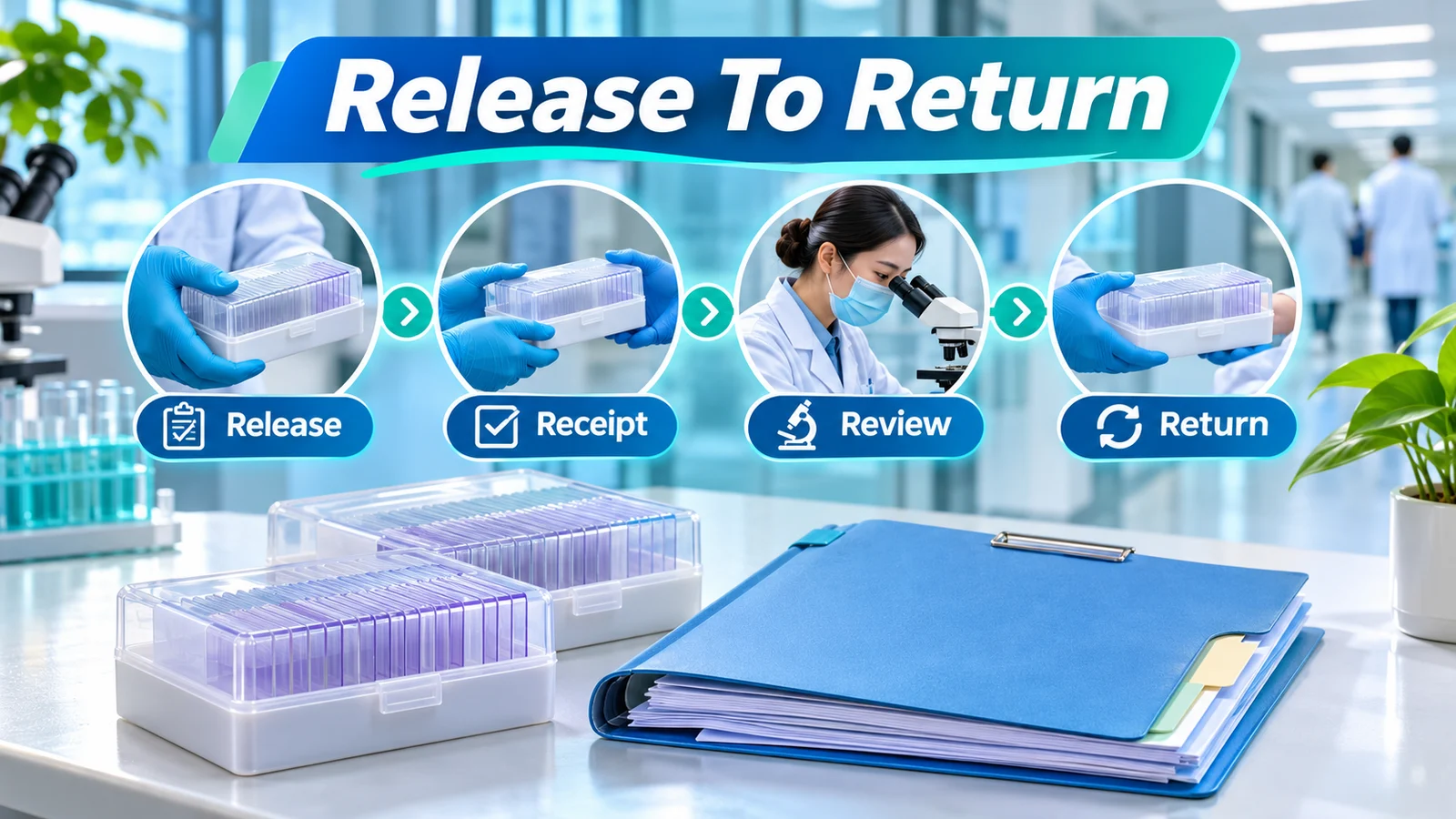
A simple pathology-material handover log
Create a table that is easy to update without changing official data:
- Status: Receiving requirements requested; Date: ________; Source or contact: ________; Reference: ________; Evidence kept: ________; Next confirmation needed: ________
- Status: Receiving requirements confirmed; Date: ________; Source or contact: ________; Reference: ________; Evidence kept: ________; Next confirmation needed: ________
- Status: Originating release requested; Date: ________; Source or contact: ________; Reference: ________; Evidence kept: ________; Next confirmation needed: ________
- Status: Material inventory confirmed; Date: ________; Source or contact: ________; Reference: ________; Evidence kept: ________; Next confirmation needed: ________
- Status: Receipt confirmed; Date: ________; Source or contact: ________; Reference: ________; Evidence kept: ________; Next confirmation needed: ________
- Status: Consultation report issued; Date: ________; Source or contact: ________; Reference: ________; Evidence kept: ________; Next confirmation needed: ________
- Status: Return or retention status confirmed; Date: ________; Source or contact: ________; Reference: ________; Evidence kept: ________; Next confirmation needed: ________
This log is not a laboratory chain-of-custody document. It is a patient-facing organizer that helps you ask the right question from the right institution. Official laboratories remain responsible for their own records and handling procedures.
Common mistakes to avoid
Treating the pathology report as the slide inventory
The report may identify a case, but it may not list each physical item. Request the laboratory's own inventory or clarification.
Requesting release before the recipient states its requirements
The China pathology department may request different materials or documents from what you expected. Ask first, then follow the written directions from both institutions.
Calling a material received because it is in transit
Only a confirmation from the named receiving department establishes receipt for the clinical review process.
Forgetting the return contact
If original materials are involved, record the originating laboratory's stated contact and next step from the start. Do not leave this until after a review.
Asking a coordinator to interpret pathology
MedToChina can help organize documents and communication questions. A pathologist and the responsible clinical team interpret pathology and decide what it means for care.
How MedToChina Can Help
Submit your information, or send your existing pathology report, any laboratory-provided inventory, and practical questions through WhatsApp. MedToChina can help organize a records list and questions for appropriate China hospital communication.
Our customer-service team can discuss possible China hospital resources after understanding your condition, timeline, country preference, budget, and available records. We do not decide whether a pathology review is clinically needed, accept materials on behalf of a laboratory, arrange cross-border transport, interpret pathology, or promise acceptance, timing, cost, or treatment results.
Frequently Asked Questions
Do I need original slides for a pathology review in China?
Not always. The receiving pathology department must state what it needs for the particular inquiry, and the originating laboratory must state what it can release.
Can I send materials before the China hospital replies?
Do not do so based on this guide. Obtain written instructions from the receiving institution and the originating laboratory first.
Does a courier or travel receipt prove the laboratory received the materials?
No. Ask the named receiving pathology department for its own receipt confirmation.
Who decides whether the materials should be returned?
The originating and receiving laboratories must clarify their own process. Record their written instructions and contacts.
Can MedToChina explain my pathology result?
No. We can organize records and practical questions. Pathology interpretation and treatment decisions must come from the responsible pathologist and clinical team.
Send Your Records and Questions Through WhatsApp
If you are considering pathology review as part of care in China, submit your information or send existing records and practical questions through WhatsApp. MedToChina can help organize a clear records list before you contact an appropriate hospital channel.
Medical Disclaimer
This guide provides general information for international patients considering medical care in China. It is not pathology, medical, legal, customs, transport, courier, financial, insurance, immigration, or travel advice. It does not identify which pathology material is needed, authorize a release, provide specimen-handling instructions, confirm acceptance, interpret a pathology result, or replace instructions from the originating and receiving laboratories and clinical teams.
Related Guides
References
- National Cancer Institute. Surgical Pathology Reports.
- National Health Commission of the People's Republic of China. Medical Institution Medical Record Management Regulations (2013 Edition).
- National Health Commission of the People's Republic of China. Basic Standards for Medical Record Writing.
- College of American Pathologists. Anatomic Pathology Checklist: Slide/Block Handling.