
Treatments
Migraine Evaluation in China: Headache Diaries and Previous Treatment Records
A practical records-preparation guide for international patients planning migraine evaluation in China, including headache diaries, medicine lists, prior treatment records, and questions for official hospital channels.
MedToChina Editorial Team · 9 min read · November 4, 2026
Quick Summary
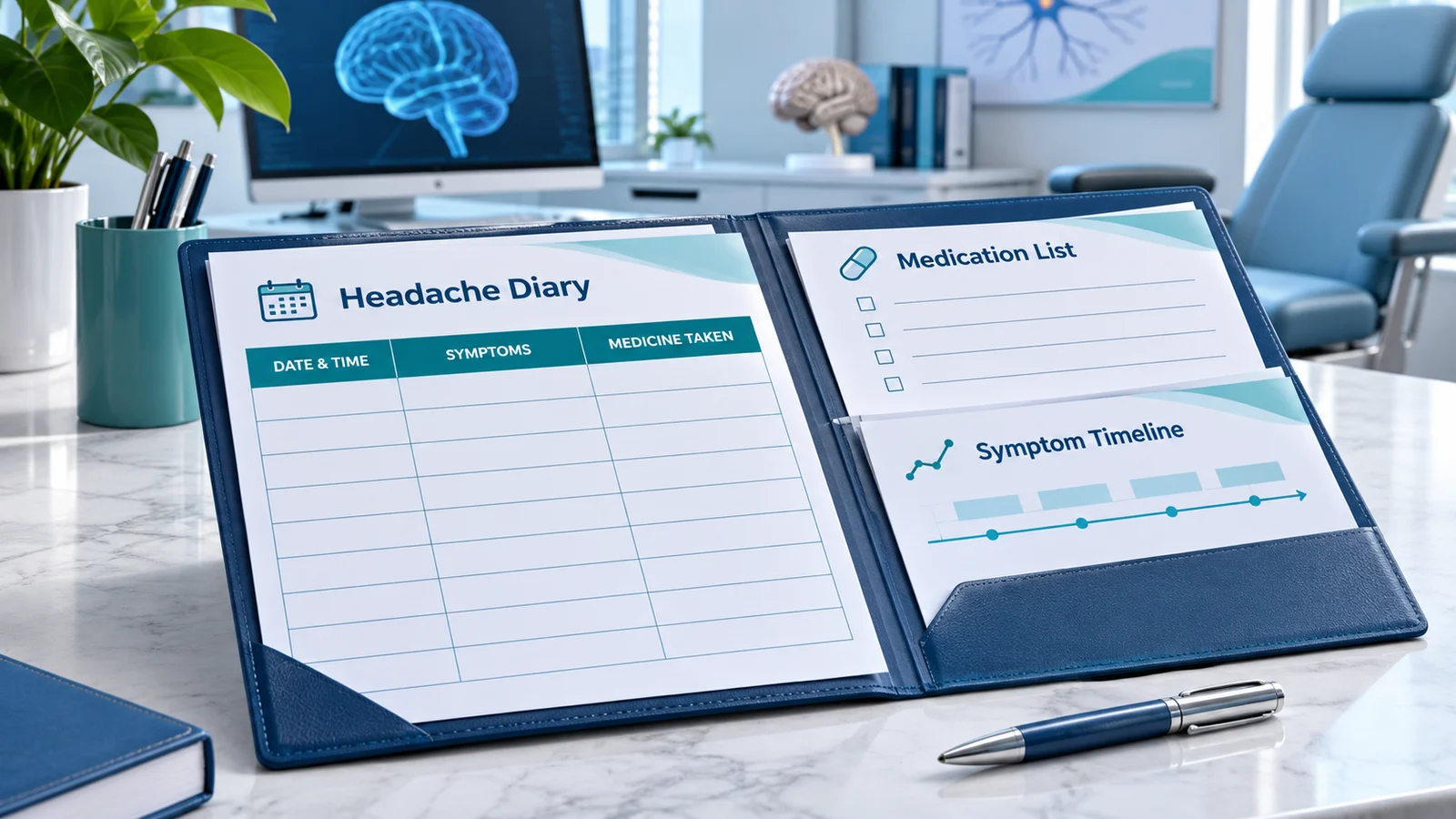
- A headache diary is a record of what happened, not a self-diagnosis tool. It helps a clinician understand timing, symptoms, functional impact, and what treatments were used.
- Before travelling to China for migraine evaluation, collect a dated headache diary, current and previous medication lists, neurology records, relevant test reports, and a concise timeline.
- Record facts such as start and end time, symptoms, medicine name and time taken, and the practical impact of an episode. Do not change doses or stop medicines because of a diary.
- Bring complete reports rather than relying on memory, screenshots without dates, or an automatically generated diagnosis from an app.
- Sudden severe or unusual headache symptoms need prompt local medical assessment; do not wait for travel coordination or an overseas appointment.
For an international patient considering migraine evaluation in China, a clear record can make a short appointment more productive. Headache care relies heavily on a careful history. A diary does not tell you what type of headache you have, but it can help the relevant clinician ask better questions about patterns, prior treatment and current concerns.
The aim is not to create a perfect journal. It is to make a factual, readable summary: when episodes happened, how long they lasted, what symptoms occurred, what medicine was taken, and what previous clinicians documented. The American Migraine Foundation describes headache journals as a way to record symptoms, frequency, severity and treatment response for discussion with a healthcare professional.[^1] This guide adapts that practical idea for people preparing records before travelling to China.
A Diary Is Evidence to Discuss, Not a Diagnosis
Headache has many possible causes. Even people who have previously been told they have migraine can experience a new pattern that needs its own assessment. Do not use a symptom tracker, online quiz or past diagnosis to rule out urgent conditions. A 2024 clinical review notes that headache evaluation relies heavily on the history, with key questions helping clinicians distinguish primary from secondary headache disorders.[^2]
Use neutral wording in the diary. Instead of writing “this was definitely a migraine,” describe what you experienced: “throbbing pain on the left side, began around 10:00, nausea and light sensitivity, stopped work at 13:00.” A clinician can decide how to interpret that information together with examination and other relevant findings.
Do not manufacture missing detail after the fact. A simple entry made on the day is generally more useful than a highly detailed reconstruction months later. If you have no diary, start one now and clearly label the period it covers.
What to Record for Each Headache Episode
Choose a notebook, calendar, spreadsheet or phone note that you can maintain. Consistency matters more than format. An entry can be short, but should make timing and context clear.
Basic Timing and Pattern
- date and approximate start and end time;
- whether the episode began suddenly or developed gradually, in your own words;
- whether there was a completely headache-free interval between episodes, if known;
- where the pain was felt and how you would describe it;
- a simple severity description or scale that you use consistently;
- whether the episode disrupted sleep, work, school, walking, driving, meals or other daily activities.
Associated Symptoms
Record symptoms you noticed, without deciding what they mean. Examples can include nausea, vomiting, light sensitivity, sound sensitivity, smell sensitivity, visual changes, numbness, speech difficulty, dizziness, neck discomfort or fatigue. Note the timing: before pain, during it, after it, or uncertain. This is more useful than a long list with no sequence.
Medicines and Other Care Already Used
Write the exact medicine name, dose as shown on the label, time taken, and what happened afterward. Include prescription medicines, over-the-counter products, supplements, emergency-department care or other treatment you actually received. Do not use the diary to create a dosing schedule or test a medication change.
The American Migraine Foundation specifically recommends documenting headache days, pain severity, medicines, time used and the medicine's observed effect when tracking headache patterns.[^3] For travel preparation, it is also helpful to retain original prescription labels and clinician instructions.
Context, Without Assuming a Trigger
You may note sleep changes, missed meals, travel, stress, menstrual timing, illness, dehydration, caffeine changes, weather, exercise or another context if you think it may be relevant. These entries are observations, not proof of a trigger. Avoid rigid food restrictions or medication changes based solely on a pattern you think you see. A clinician can help decide what is meaningful.
Create a Migraine Records Package Before China Travel
Organize the records in a simple order. A new clinical team should be able to see the overall history without searching through years of chat screenshots.
| File | What to include | | --- | --- | | 01-headache-timeline.pdf | When headache problems began, important changes, and major care events | | 02-recent-headache-diary.pdf | Dated entries, preferably covering the most recent useful period | | 03-current-medication-list.pdf | Medicine names, doses as prescribed, schedules, allergies and adverse reactions | | 04-previous-treatment-summary.pdf | Treatments tried, dates, prescribing clinician if known, and documented response or reason for change | | 05-neurology-and-clinic-notes.pdf | Prior consultation notes, discharge summaries and referral letters | | 06-tests-and-imaging.pdf | Existing reports and image files when they were already obtained |
Keep original-language documents. If a translation is available, include it with the source document and keep dates, facility names and medication names visible. Do not send passwords, verification codes or unnecessary identity documents through an unverified channel. Ask the relevant hospital how it accepts overseas records and what file size or format is appropriate.

How to Write a Useful Prior-Treatment Summary
The previous-treatment list should be factual, not a request for a particular prescription. For each medicine or treatment you already tried, record:
- generic and brand name, if known;
- dose and schedule exactly as prescribed;
- approximate start and stop dates;
- who prescribed it, if known;
- what the prescribing clinician recorded about benefit, side effects or reason for stopping;
- whether you are currently taking it;
- allergies and prior adverse reactions.
Do not omit medicines that seem unrelated, including hormonal medicines, supplements, anticoagulants, blood-pressure drugs or sleep medicines. A current clinician needs a complete medication picture. Do not stop or taper medicine before travel unless the prescribing clinician tells you to do so.
If you have tried non-drug interventions, record only what occurred and when. Do not present a treatment response as proof that you have, or do not have, a particular diagnosis.
Questions to Ask Before a Migraine Evaluation in China
An official hospital or international-patient contact can help with administrative questions. A concise message may state your current country, whether you have a previous migraine diagnosis, the record types available, your planned travel period, and the language of the files.
Ask:
- Which records should be submitted before a headache or migraine evaluation?
- Does the department accept a diary, previous neurology notes, medication lists, imaging reports, or image files?
- What format and upload channel are accepted for records from overseas?
- Should a diary be brought on paper, sent as a PDF, or both?
- What should be included if earlier records are incomplete or unavailable?
- Which department or registration route handles a planned migraine evaluation?
- Who should be contacted if a document is unreadable or has no translated version?
These questions support records preparation. They do not establish a diagnosis, confirm an appointment, select a treatment, or say that a particular medication is suitable.
Keep the Diary Readable
The most useful diary is one a clinician can scan quickly. The American Migraine Foundation advises that a calendar entry can be enough and need not become a long narrative.[^4] Use one line per event when possible. Place long descriptions in an attached note rather than burying dates and medicines in a paragraph.
For example:
4 May, 08:30–15:00. Left-sided pulsating pain, nausea and light sensitivity. Missed work from 11:00. Took medicine as prescribed at 09:00; noted partial relief by 12:00. No conclusion about trigger.
This format describes the event without giving yourself a diagnosis or medication instruction. It also makes translation easier if the receiving team requests it.
What Not to Do With Your Records
Do not use a diary to decide that a new or unusual headache is “just migraine.” Do not use an app output to replace medical assessment. Do not start, stop, combine or increase medicines based on calendar entries. Do not delay urgent care while waiting to compile a perfect file package.
Clinical guidance on migraine assessment commonly includes headache frequency, medication use, disability and treatment response as relevant discussion points.[^5] Those items help a clinician evaluate the situation; they do not allow a website to provide a patient-specific diagnosis or treatment plan.
When to Seek Urgent Local Care
Seek prompt local urgent or emergency care for a sudden severe headache unlike your usual pattern, headache after significant injury, new weakness or numbness, new speech or vision changes, fainting, seizure, confusion, fever with a severe headache or stiff neck, or another rapidly worsening concern. Do not wait for a China appointment, records review or WhatsApp response.
For routine travel planning, discuss personal travel, medication supply and follow-up needs with your current clinicians and relevant providers. MedToChina does not assess whether a person is fit to travel or provide urgent triage through this article.
How MedToChina Can Help
MedToChina can help international patients organize a headache diary, a record inventory and non-sensitive administrative questions for official China hospital channels. You may submit the types of records you have or send logistical questions through WhatsApp. We can help you present the dates, document sources, language needs and missing items clearly.
We do not diagnose headache conditions, advise medicine doses, recommend starting or stopping treatment, interpret imaging, confirm a treatment plan, or promise a result. Clinical assessment and care decisions remain with the relevant qualified team.
FAQ
How Long Should My Headache Diary Cover?
Bring the period you have documented and label its start and end dates. The receiving clinician can tell you whether more history is useful; do not postpone a needed local assessment just to collect more entries.
I Have No Old Neurology Notes. Is a Diary Still Useful?
Yes. State that older notes are unavailable, keep a current factual diary, and bring the medication and test records you can find. Missing records should be marked rather than recreated from memory.
Should I Record the Exact Dose of Every Medicine?
Record the dose and schedule exactly as shown on the prescription or label when you can. Do not use the diary to decide a new dose or alter a prescription.
Can a Symptom Tracker Diagnose Migraine?
No. A tracker records what you report. Diagnosis and treatment decisions require an appropriate clinical assessment.
Can MedToChina Tell Me Which Migraine Treatment to Request in China?
No. We can help organize records and administrative questions. Medicine selection and treatment decisions require the relevant clinical team.
Related MedToChina Resources
- Neurology in China
- China-ready medical records checklist
- Medical documents for care in China
- Second medical opinion records
WhatsApp CTA
Preparing for migraine evaluation in China? Send your available record types and non-sensitive logistical questions on WhatsApp, or submit your information. We can help you prepare a clear diary and records checklist for the appropriate official channels.
Medical Disclaimer
This article provides general records-preparation information for international patients considering migraine or headache evaluation in China. It is not medical, diagnostic, medication, travel, legal, insurance or financial advice. It does not diagnose migraine or another headache disorder, interpret symptoms or tests, advise a medicine dose or change, assess travel fitness, or confirm treatment availability or outcomes. Individual evaluation must be performed by an appropriately qualified clinician. For urgent symptoms, seek prompt local care.
References
[^1]: American Migraine Foundation. Headache Journals: Tracking Your Migraine. Accessed November 4, 2026. [^2]: Friedman DI. Approach to the Patient With Headache. *Continuum*. 2024. PMID: 38568485. [^3]: American Migraine Foundation. Medication Overuse Headache. Accessed November 4, 2026. [^4]: American Migraine Foundation. Tips for Managing Migraine After a Diagnosis. Accessed November 4, 2026. [^5]: Ducros A, et al. Revised guidelines for diagnosis and assessment of migraine in adults. *Revue Neurologique*. 2021. PMID: 34340812.