
Visa & Travel
Before Tests in China: Confirming Preparation Instructions and Who to Contact
A practical guide for international patients to verify the latest China hospital test instructions, dates, versions, and official contacts before travel.
MedToChina Editorial Team · 8 min read · October 29, 2026

Quick Summary
Before a test in China, international patients may receive instructions from different sources: an appointment notice, a patient portal, a department message, a translated summary, or an earlier email. If the instructions differ, do not guess which one applies. Confirm the exact test, campus, date, China local time, current instruction version, and official department contact.
This guide helps organize questions and document versions. It does not provide fasting durations, medication changes, contrast guidance, or other clinical preparation instructions. The department performing the test must confirm what applies to you.
Reviewed October 29, 2026.
Why Instruction Versions Matter
Preparation can differ between tests, facilities, equipment, appointment times, patient conditions, and current medications. A message that was correct for one appointment may not apply to another. An English translation may also omit the date, version, department, or condition that gives an instruction meaning.
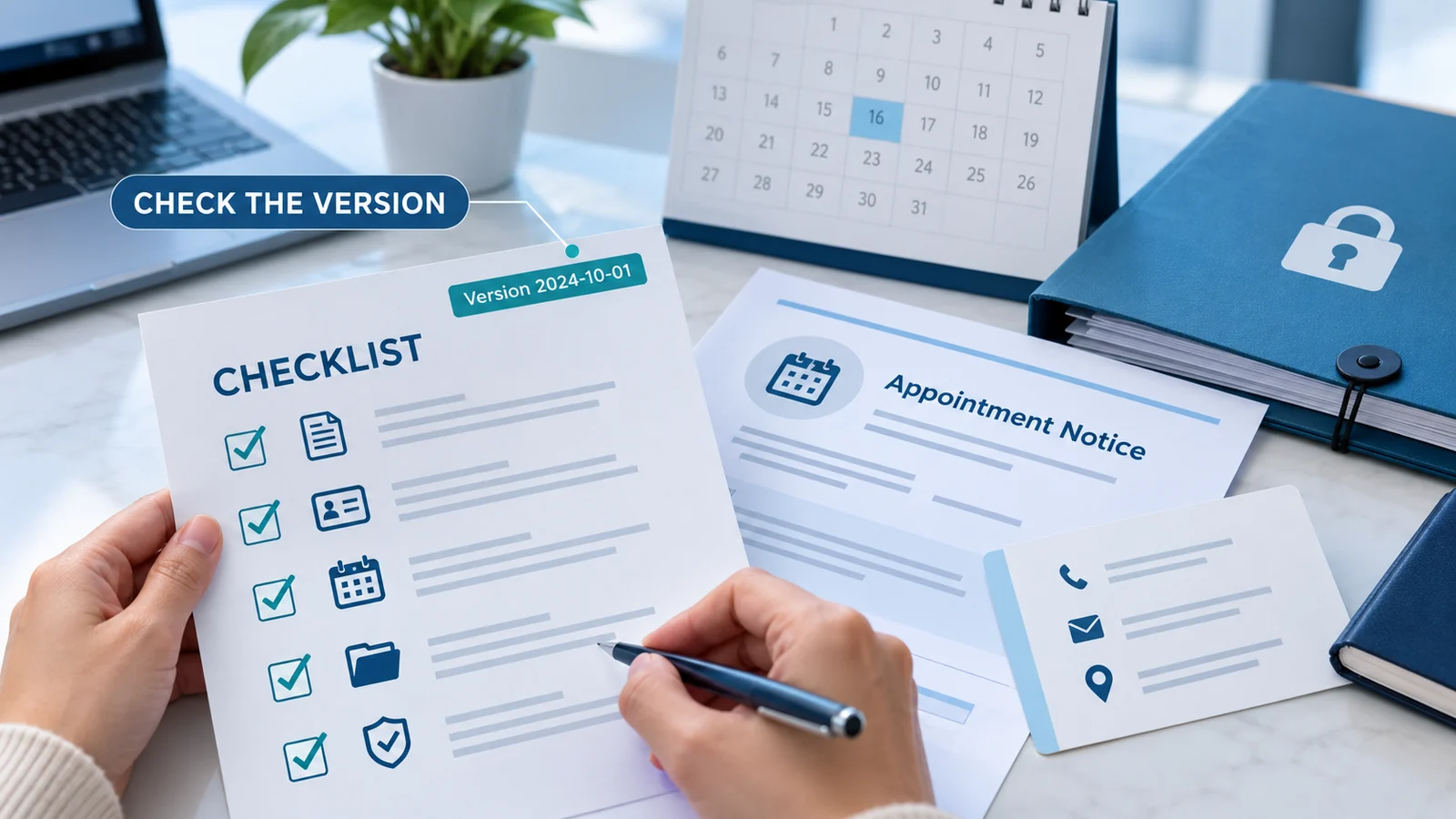
The safe administrative approach is to treat each instruction as linked to a specific test and appointment. Instead of asking only, “What should I do before my test?”, first identify which notice is current and who issued it. Keep the original notice, its date, the test it refers to, and the official contact responsible for clarification.
MedToChina can help international patients organize the questions to send. We do not create clinical preparation plans, interpret whether an instruction is medically suitable, or replace the performing department's confirmation.
Make One Instruction Record for Each Test
Use a separate row for each scheduled test, even if several appointments occur on the same day. Record the facts from the hospital notice:
- Test name as stated by the institution.
- Hospital, exact campus, department, room or arrival point if given.
- Date, China local time, and required arrival time.
- Notice date, sender, language, and any version or update label.
- Patient name or reference number shown in the notice.
- Official contact channel for questions.
- Documents or previous results the department asks you to bring.
- Whether the instruction is confirmed, unclear, superseded, or awaiting clarification.
Do not combine instructions from different tests into one general list. A preparation notice for imaging, blood work, endoscopy, anesthesia assessment, or another procedure may use different requirements.
How to Identify the Current Version
Start by placing all notices in date order. Look for the source: a hospital portal, department message, official email, printed instruction, or an intermediary's summary. The most recent message is not automatically the governing version if it refers to a different appointment or does not come from the performing department.
Ask the department to confirm the instruction that applies to your exact appointment. A concise message can include the appointment date and time, campus, department, test name, and the dates of the two notices that appear inconsistent. Attach the notices only through the channel the institution specifies.
Useful wording is: “I have two preparation notices for my appointment on [date/time in China]. Please confirm which current instruction applies to this specific test and identify the official contact for any further question.” This request does not ask the institution to diagnose or recommend treatment; it asks it to clarify its own administrative and clinical instructions.
Common Types of Conflict to Flag
Instructions can conflict in several ways. The goal is to identify the conflict, not to resolve it yourself.
- Date or time conflict: The same test appears at different times or on different dates.
- Campus conflict: The hospital name is the same but the notice names a different site or building.
- Test-name conflict: One notice uses a broad name and another uses a specific examination label.
- Preparation conflict: Two notices state different pre-test requirements.
- Medication-related conflict: A general web or prior instruction conflicts with a current department notice.
- Language or translation conflict: A translated version seems to omit a condition or uses different wording from the source notice.
- Contact conflict: The sender is not clearly tied to the department performing the test.
When one of these occurs, preserve both notices, avoid making a change based on an assumption, and ask the official department contact to confirm the current version.
Questions to Send to the Performing Department
Patients can keep questions short and factual:
- Please confirm the exact test, campus, department, date, China local time, and arrival time for my appointment.
- Which preparation notice and version applies to this appointment?
- I have received two different instructions. May I send both through your official channel for clarification?
- Does the department need original reports, images, identification, a translation, or a completed form before arrival?
- If I have a question about a current medication, a health condition, pregnancy possibility, allergy, prior reaction, or other clinical issue, which clinician or department should provide individualized advice?
- If I cannot attend or an instruction changes, which official contact should I use?
Medication, Fasting, and Contrast Questions Require Individual Confirmation
Many patients search for general preparation rules before travelling. This can be risky because test type, medical history, current medicines, kidney function, diabetes management, allergies, pregnancy, prior reactions, and other factors can change what a department asks a particular patient to do.
This guide does not state how long to fast, whether to take or stop a medicine, how to adjust a dose, whether contrast is appropriate, or how to prepare for sedation. Do not replace the latest department instruction with an old notice, an online article, a friend's experience, or a general translation. If there is uncertainty, contact the team responsible for the scheduled test and the clinician currently managing your care.
Translation and Understanding the Instruction
If you need language support, ask what language the official instruction is available in and whether the department can clarify key points in writing. Keep the source notice alongside any translation. A family member or an outside translator may help you understand the wording, but they cannot determine what the department intended.
Use a simple “teach-back” check: write down the test name, date, China local time, campus, arrival point, current document version, and official contact. Send that factual summary back to the department if it asks you to confirm understanding. Do not add clinical interpretation.
What to Do if the Issue Remains Unresolved
If the appointment is approaching and the instruction is unclear, use the hospital's official contact channel. Explain what is unclear and include your appointment identifiers. Do not rely on a non-official message as a replacement for department confirmation.
If you feel acutely unwell or have symptoms that seem urgent, seek timely local medical care. Do not wait for a planned test in another country or for an administrative response. This article is not an emergency service and does not assess whether a person should travel or proceed with a test.
How MedToChina Can Support Preparation
MedToChina supports overseas patients considering care in China by helping them organize practical questions, record lists, and administrative checklists. Submit your information or send available appointment notices, records, and questions through WhatsApp. After understanding your condition, available records, timeline, country preference, and practical needs, our customer service team can discuss possible China care resources.
We do not provide test-preparation instructions, change medication, decide whether a test is appropriate, interpret results, determine travel readiness, or promise appointment availability, testing speed, treatment, cost, or outcome. The performing department and appropriate clinicians must confirm any clinical instruction.
Frequently Asked Questions
Which Instruction Should I Follow if Two Notices Differ?
Do not choose on your own. Ask the department performing the test to confirm the current instruction for your exact appointment.
Can a General Web Guide Replace a Hospital Notice?
No. General information may not apply to your test, health history, or current appointment. Use the official department confirmation.
Should I Stop Medication Before a Test?
Do not make medication changes based on this guide. Ask the prescribing clinician and the department performing the test for individualized instructions.
What Details Should I Include When I Ask for Clarification?
Include your appointment date and China local time, campus, department, test name, reference number if available, and the dates of the conflicting notices.
Can a Companion Receive Preparation Instructions for Me?
Ask the hospital about consent, identity, privacy, and communication requirements. Do not assume another person can receive your health information.
Does Sending My Notices Confirm a China Hospital Appointment?
No. Document submission does not confirm an appointment, test, admission, or treatment. The hospital must confirm each step.
Contact MedToChina on WhatsApp
Submit your information or send your test appointment notices, available records, and practical questions through WhatsApp. We can help you prepare an administrative clarification checklist before discussing possible care in China.
Medical Disclaimer
This article provides general administrative information for international patients preparing for tests in China. It is not medical, diagnostic, treatment, medication, fasting, contrast, sedation, nursing, insurance, visa, or travel advice. It does not determine test suitability, interpret instructions or results, establish travel readiness, or confirm appointment availability, test timing, treatment, cost, or outcome. Follow the instructions of the performing department and treating clinicians. Seek timely local emergency care for urgent or severe symptoms.
References
- World Health Organization. Patient safety.
- U.S. Food and Drug Administration. Medical Imaging.
- Centers for Disease Control and Prevention. Medical Tourism.
- U.S. Department of State. Insurance Coverage Overseas.
- GOV.UK. China travel advice: health.