
General
Hospital Complaints and Patient Feedback in China: Contacts and Records to Check Before Care
A practical guide for international patients to confirm hospital feedback contacts, language support, records, and escalation questions before care in China.
MedToChina Editorial Team · 9 min read · October 23, 2026

Quick Summary
Before travelling to China for medical care, ask the hospital which official contact handles non-urgent service feedback, administrative concerns, and follow-up questions for international patients. Confirm the exact campus, department, language support, secure contact method, and what record you should keep. A clear written record can make a routine concern easier to explain without turning it into a clinical or legal conclusion.
China's health authorities require medical institutions to maintain complaint-management arrangements and communication channels, but the contact route and process can differ by hospital and locality. This guide does not provide a nationwide contact number or predict how any concern will be resolved. It helps you prepare a factual, respectful request to the relevant hospital.
Reviewed October 23, 2026.
Why Check Feedback Contacts Before Care Begins
International patients often prepare medical records, passports, travel dates, and payment questions, but overlook practical communication if something is unclear after arrival. A feedback contact is not only for a serious dispute. It can be useful when there is uncertainty about an appointment message, registration step, translation issue, billing-document request, service experience, or who should answer an administrative question.
Knowing the right contact in advance is different from assuming a hospital will give a particular answer. It gives you a documented route for raising a concern through the institution rather than relying on an unverified online account, a general social-media message, or a person who may not have authority to assist.
National Health Commission complaint-management materials describe patient feedback and complaints as matters institutions receive, investigate, handle, and respond to. National policy also calls on institutions to maintain accessible channels and a patient-request response process. Implementation varies, so your planned hospital, campus, and department are the authoritative sources for current contact details and process.
Separate Urgent Care From Service Feedback
This guide concerns non-urgent communication about hospital services and administrative concerns. It must not delay emergency care.
If you or someone travelling with you has severe or rapidly worsening symptoms, seek emergency medical help immediately where you are. Do not wait for a patient-relations response, translation clarification, or travel-coordinator discussion. For a possible clinical safety concern while at the hospital, tell the treating team or on-site staff promptly and follow the hospital's emergency instructions.
For non-urgent matters, begin with the service point closest to the issue when appropriate. An appointment-time question may belong with the appointment or international-patient office; an invoice-copy question may belong with billing; and a communication concern may go through a patient-service or feedback contact. Ask the hospital where to direct the issue instead of sending the same message broadly to multiple people.
What to Confirm Before You Travel
Ask the official international-patient, patient-service, or administrative channel these focused questions:
- What is the official contact for non-urgent patient feedback or service concerns at the exact campus I plan to use?
- Is there a separate contact for overseas or international patients?
- What languages can that contact support, and is interpretation available for administrative communication?
- Which issues should go to the department first, and which should go to a patient-service or feedback office?
- What secure email address, web form, phone route, or in-person desk should be used?
- What patient identifiers or documents are needed to locate an appointment or service record?
- Will the hospital provide a case, reference, or receipt number for written feedback?
- How should a patient ask for an update if no response has been received through the original channel?
Keep questions administrative. Ask where to send records or a service concern, not whether a medical result or treatment choice will be promised.
Build a Clear Factual Record
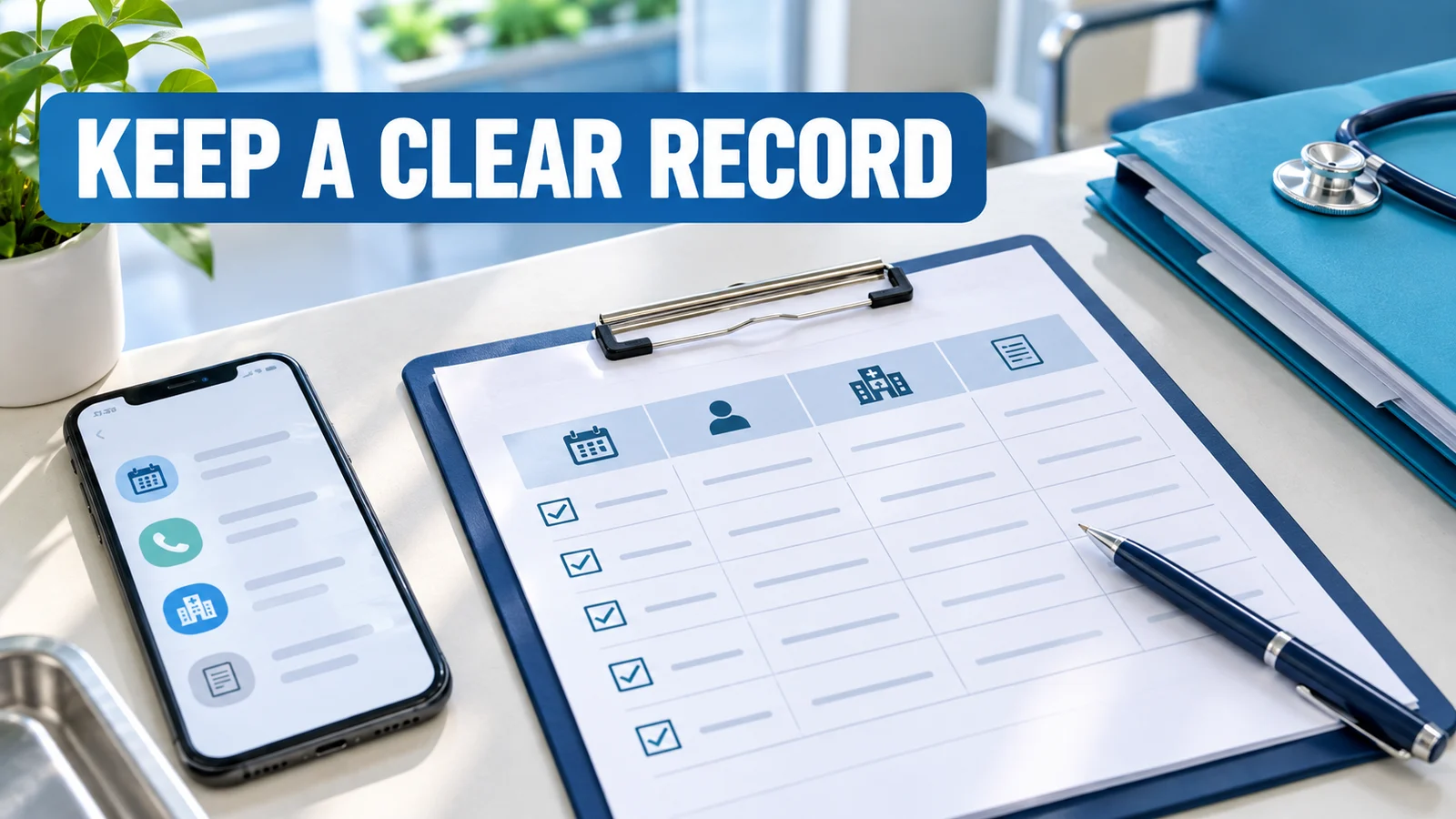
Before sending feedback, write a short timeline. Include the date and local time, hospital name and campus, department or service point, appointment or registration reference where one exists, names or roles of staff only when known, and the factual issue you want clarified.
State what you are asking for: confirmation of an appointment contact, an itemized-receipt copy, clarification of a translation arrangement, confirmation that records were received, or the correct contact for a service concern. Avoid accusations, assumptions about intent, or medical conclusions that you cannot verify.
Attach only documents needed to identify the issue. An appointment confirmation, invoice reference, or prior email may be enough. Do not send a full passport scan, complete medical history, payment-card details, or another person's health information unless the verified hospital route specifically requests it.
A Simple Feedback Note Template
Use plain, neutral language in an email or web form:
Subject: Non-urgent patient service question — [hospital campus] — [appointment or reference]
>
I am an international patient planning or receiving care at [campus or department]. On [date and time], I [brief factual event]. I have attached [only relevant document]. Please confirm the appropriate contact or next administrative step for [specific question]. My preferred language is [language]. I can be reached at [secure contact method].
Keep the original message, attachment names, and time sent. If you speak with someone by phone or in person, record the date, role or name, main information given, and any reference number. A personal note aids accurate follow-up; it does not replace a hospital's official record.
How to Ask for an Update Without Escalating Confusion
If a non-urgent concern has not received a response, use the original official route first. Refer to the earlier message, date, reference number, and the specific clarification still needed. Ask whether it should be redirected to another department or designated feedback contact.
Do not assume silence means a final decision, refusal of care, or medical finding. Administrative workloads, translation needs, time zones, and internal review can affect communication. Do not let a time-sensitive medical concern wait solely for an administrative response. Contact the treating team or obtain local care if symptoms require timely attention.
Privacy and Communication Safeguards
Use the official hospital website, an address confirmed by the hospital, or an on-site desk to obtain contact details. Be cautious with accounts that use hospital logos but are not linked from an official source. Ask which channel is suitable for personal information and whether a patient identifier should be included in the subject line.
When a family member communicates for a patient, ask what authorization or consent is needed before discussing information. Do not assume a companion can receive clinical or billing details simply because they are travelling with the patient. Confirm the hospital's process if interpretation is needed.
What the National Guidance Means for Patients
National Health Commission materials describe a framework in which medical institutions establish complaint-management functions, accessible channels, receipt and handling processes, and feedback to patients. Guidance has promoted one-stop complaint handling, a first-contact responsibility approach, and closed-loop management. These principles are useful context, but they do not create one identical contact route, response time, or outcome at every facility.
Use this context to ask for a clear institutional route, responsible department, way to make a record, and explanation of the next administrative step. Do not cite national guidance as proof that a particular hospital must resolve a matter in a specific way or time.
Where MedToChina Can Help
MedToChina can help overseas patients organize non-urgent administrative questions before travel, prepare a concise record list, and understand which details may be useful when contacting an official hospital channel. Submit information or send questions and available records through WhatsApp. After understanding your condition, timeline, country preference, budget, and available records, customer service can discuss possible China hospital resources and practical preparation.
MedToChina is not a medical regulator, complaint authority, law firm, insurer, or hospital feedback office. It does not decide fault, investigate hospital conduct, promise a response, or replace urgent medical assistance.
Frequently Asked Questions
Is a Feedback Contact Only for a Formal Complaint?
No. Ask the hospital whether it has a patient-service or international-patient contact for non-urgent questions and service concerns. The hospital can identify the appropriate route for the issue.
Is There One Complaint Phone Number for Every Hospital in China?
Do not assume there is. Contact details and processes can vary by hospital, campus, and locality. Confirm the current official route with your planned hospital.
What Should I Include in a Message?
Include factual dates, campus, department, an appointment or reference number where available, a concise description, and the administrative question you need answered. Send only necessary documents through a verified route.
Should I Use Feedback Channels for Urgent Symptoms?
No. Seek urgent medical assistance immediately for severe or worsening symptoms. Feedback and administrative channels should not delay emergency care.
Can MedToChina Resolve a Complaint for Me?
No. MedToChina can help organize non-urgent administrative questions, but the hospital and relevant authorities handle feedback and complaint processes.
Discuss Your Preparation Questions With MedToChina
Need help preparing a clear, non-urgent question before contacting a China hospital? Submit your information or send questions and available records through WhatsApp. MedToChina can help organize an administrative checklist for communication before travel.
Medical Disclaimer
This guide provides general administrative and travel-planning information only. It is not medical, legal, insurance, or dispute-resolution advice. It does not determine fault, patient rights, clinical urgency, or a hospital's response. Hospital procedures and local requirements can change. Confirm the current process directly with the relevant hospital, and seek urgent local medical care for emergencies.
References
- National Health Commission of the People's Republic of China. Notice on Further Strengthening Complaint Management in Medical Institutions.
- National Health Commission of the People's Republic of China. Interpretation of the Measures for Complaint Management in Medical Institutions.
- National Health Commission of the People's Republic of China. Interpretation of the Ten Requirements for Complaint Reception and Handling.
- National Health Commission of the People's Republic of China. Measures for Complaint Management in Medical Institutions.