
TCM
Traditional Chinese Medicine and Western Medicine in China: What International Patients Need to Know
A guide for international patients comparing traditional Chinese medicine, Western medicine, and integrated care in China, including when TCM may help and when emergency or surgical care should use Western medicine.
MedToChina Editorial Team · 5 min read · June 20, 2026
Core Framework: China’s Dual-Track Medical System
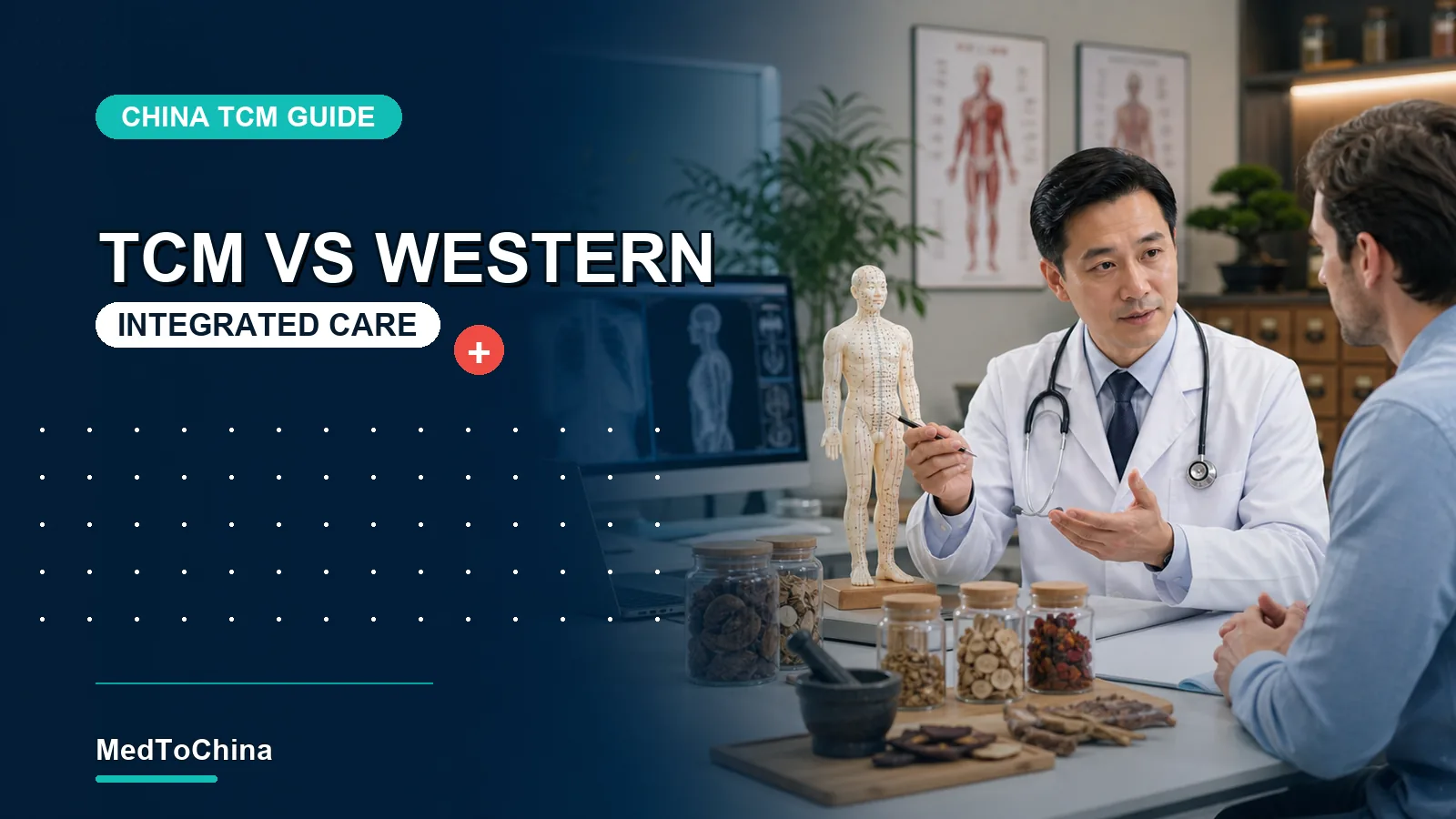
China may be the only major healthcare system where traditional Chinese medicine and Western medicine operate in parallel, complement each other, and are often integrated within the same formal medical structure. Pure traditional Chinese medicine sits at one end of the spectrum, integrated Chinese and Western medicine sits in the middle, and pure Western medicine sits at the other end. The decision is not either-or; it is about which approach to use at which moment.
Western Medicine in China
Strengths: large-scale surgery, advanced equipment, and strong emergency capability. Limitations: very short consultations, often only three to five minutes; possible overtreatment; and a relatively immature rehabilitation system compared with some Western countries.
- Class-A tertiary hospitals: More than 3,000 nationwide
- Annual surgical volume: Second largest in the world
- Da Vinci robotic systems: Highest installed base in Asia-Pacific, with more than 300 systems
- Clinical trials: The world’s second largest clinical trial base
Traditional Chinese Medicine: The System Many Western Patients Misunderstand
Start by clearing the main misconceptions.
- Traditional Chinese medicine is a legal part of China’s medical system: It is merely alternative medicine or informal street care
- TCM doctors can order Western medical tests: TCM only looks at the tongue and pulse
- Some TCM services are covered by medical insurance: Everything is fully self-pay
- Licensed TCM doctors must pass national physician qualification requirements: Family tradition alone equals medical qualification
Where TCM Is Strong
Chronic pain such as low back pain and cervical spine disease can respond well to acupuncture and therapeutic massage. Functional digestive problems and IBS may benefit from herbal regulation. Insomnia and anxiety may be managed with fewer side effects than some Western drugs. Postoperative recovery and post-stroke recovery may use acupuncture as an adjunct for neurologic recovery, and TCM may help reduce side effects during chemotherapy or radiotherapy.
When You Should Absolutely Not Rely on TCM
Acute myocardial infarction requires immediate Western emergency care. Acute infection or high fever requires anti-infective treatment first. Diseases requiring surgery, such as appendicitis, fracture, or tumor surgery, require Western surgical care. Relying only on TCM for advanced cancer is dangerous.
Integrated Chinese and Western Medicine
In the simplest terms, Western medicine saves lives, while TCM may support recovery, conditioning, symptom control, and rehabilitation.
- Condition: Western Medicine; Traditional Chinese Medicine
- Acute stroke: Thrombolysis or thrombectomy; Not used as the primary acute treatment
- Stroke recovery phase: Physical and occupational therapy; Acupuncture may support recovery
- Cancer treatment phase: Chemotherapy and radiotherapy; May reduce side effects as an adjunct
- Chronic pain: Analgesics and interventional care; Acupuncture may reduce medication dependence
Decision Tree
If symptoms suggest an emergency, such as chest pain or major bleeding, go to Western emergency care. If surgery is needed, see a Western specialist. If the problem is chronic pain, insomnia, or digestive dysfunction, consider TCM or integrated Chinese and Western medicine. If the issue is postoperative recovery or side effects from chemotherapy or radiotherapy, integrated care may be appropriate.
Quick Department Selection
- Cancer treatment: Medical oncology or surgical oncology under Western medicine
- Chemotherapy side effects: Integrated Chinese and Western Medicine Department
- Heart surgery: Fuwai or Anzhen under Western medicine
- Chronic low back pain: Acupuncture or therapeutic massage department
- Emergency fracture care: Orthopedic emergency department under Western medicine
- Fracture recovery: Rehabilitation department plus acupuncture department
Herbal Medicine Safety for International Patients
- Safer Approach: Dangerous Approach
- Prescription from a formal hospital: Self-purchasing herbs online or from informal vendors
- Approved Chinese patent medicines with official registration numbers: Unregistered “ancestral secret formulas.”
- Physician adjusts the formula based on liver and kidney function: Herbs containing aristolochic acid or other known risks
Safety rules: use formal hospitals rather than random pharmacy purchases; tell both Western and TCM doctors about all current medications; monitor closely if you take anticoagulants such as warfarin; do not believe claims that “natural” means no side effects; stop herbal medicines before surgery when instructed; and use extra caution during pregnancy or breastfeeding.
Final Advice for International Patients
Set the direction first: emergencies need Western medicine, conditioning and recovery may use TCM, and the best option is often integrated care. Do not interpret TCM entirely through a Western disease-name framework; TCM treats according to syndrome patterns. If language is a barrier, prioritize international hospitals or the international department of a large general hospital. If you visit a dedicated TCM hospital such as Guang’anmen Hospital or Guangdong Provincial Hospital of Chinese Medicine, bring an interpreter. If you take both Western and Chinese medicines, both doctors must know.
Related MedToChina Resources
Planning Note
MedToChina can help international patients organize records, compare suitable hospital pathways, coordinate appointments, arrange medical translation, and plan non-emergency travel logistics in China. MedToChina is not a hospital, insurer, emergency provider, or source of medical advice. Clinical decisions must be made with licensed clinicians after reviewing the patient's case.
Medical Disclaimer
This guide is for general education and planning only. It does not replace professional medical, legal, insurance, immigration, or financial advice. Requirements, prices, hospital access, and visa handling can change. Patients should confirm details with the relevant hospital, insurer, Chinese visa center, immigration authority, and licensed professionals before making decisions.