
General
A Complete 2026 Guide to Seeking Medical Care in China as a Foreigner
A complete 2026 guide for foreigners seeking medical care in China, covering medical access, hospital choice, insurance, emergency resources, costs, special scenarios, and practical preparation.
MedToChina Editorial Team · 6 min read · June 20, 2026
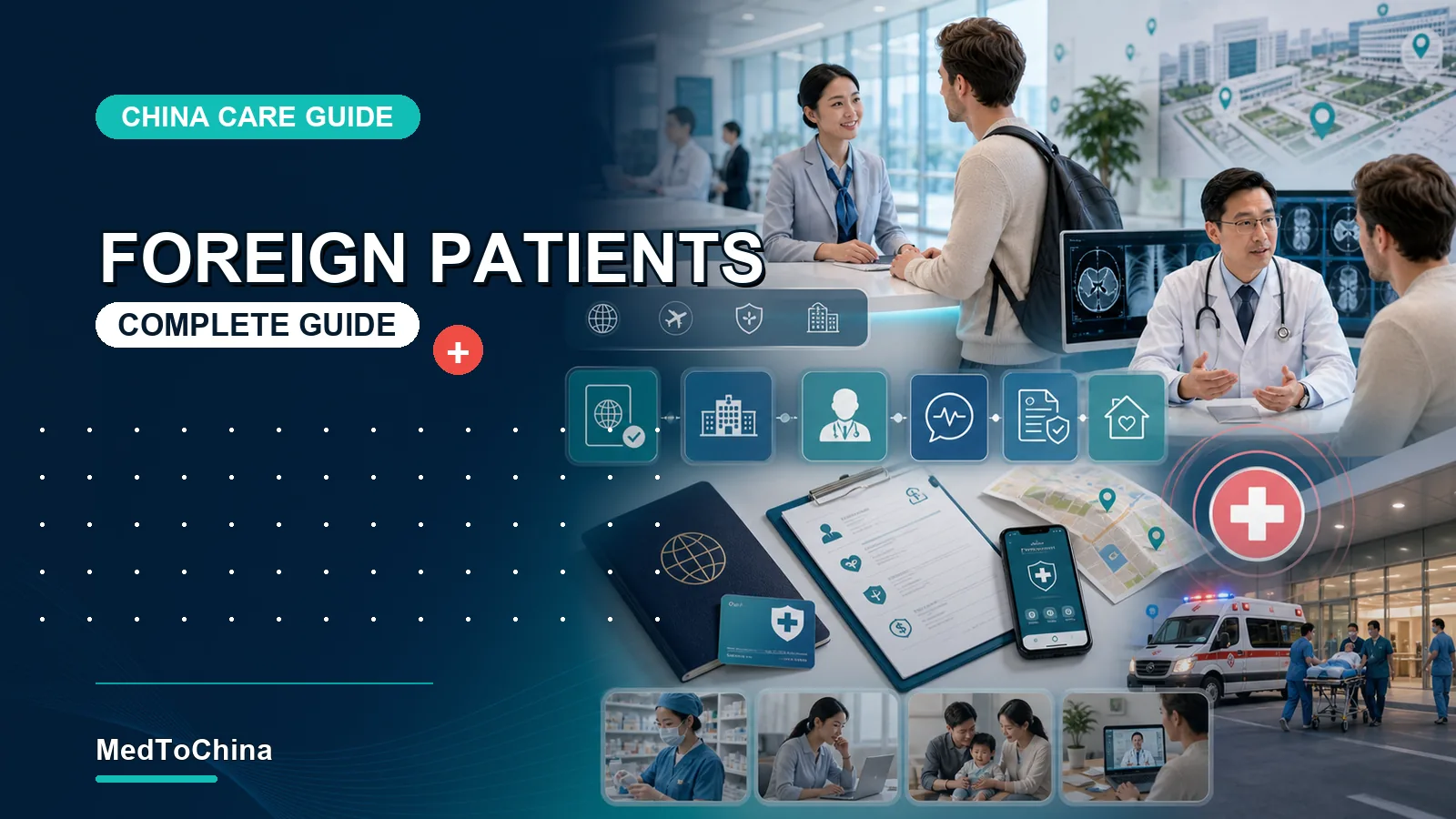
Core Overview
China’s medical system is open to foreigners in a tiered way. Foreigners can self-pay at medical institutions of any level. Permanent residents with a green card may enjoy national medical insurance treatment. Work-visa holders who participate in social insurance may join employee medical insurance. Tourists and business visitors cannot join basic medical insurance. Some cities are piloting foreigner-friendly medical access programs.
- International hospital or international department: High, often with direct billing; Patients with international insurance who want convenience
- Public Class-A tertiary hospital: Medium, self-pay possible; Long-term residents and people with social insurance
- Community hospital or clinic: Low, usually self-pay; Basic primary care
- Private foreign-oriented clinic: Medium to high; Everyday minor illnesses
Chapter 1: Visas and Medical Access
- Z work visa and X1 long-term study visa: May participate in basic medical insurance when eligible
- Permanent residence green card: Full national treatment
- L, M, F, and X2 short-term visas: Cannot join basic insurance; commercial insurance is needed
- Diplomatic visa: Handled according to diplomatic medical agreements
Chapter 2: How to Choose a Hospital
International hospitals are recommended for many foreign patients. Examples include United Family, Shanghai Jiahui, Shanghai Parkway, Guangzhou CanAm, and Chengdu Eagle. They provide fluent English, comfortable environments, and direct billing. Public hospital international departments are the value choice. Examples include PUMCH International Department, Huashan Hospital International Medical Center, special medical services at the First Affiliated Hospital of Sun Yat-sen University, and the University of Hong Kong-Shenzhen Hospital International Medical Center. They combine top medical strength with English service. For emergencies or severe illness, choose a tertiary hospital or international hospital emergency department. For everyday minor illness, use a foreign-oriented clinic or community hospital. For specialty care, use a tertiary specialty center or international hospital. For checkups, choose a private checkup center. For dentistry, choose a foreign-oriented dental clinic. For vaccination, use an international travel health care center.
Chapter 3: Insurance System Explained
Employee medical insurance for work-visa holders is usually funded by employer contributions of about 6% to 10% and personal contributions of about 2%. Outpatient reimbursement may be about 50% to 70%, inpatient reimbursement about 70% to 95%, with annual caps often around CNY 300,000 to 500,000. Commercial insurance is strongly recommended even if you have social insurance. It can cover imported drugs, special medical wards, and other self-pay items; provide direct billing so you do not need to pay upfront; and include overseas medical care, dentistry, and other extended benefits. International insurers available in China include Cigna, AXA, Allianz, Bupa, MSH, Ping An Health, and China Pacific Insurance. Short-term visitors should buy travel insurance before departure and confirm that it includes medical evacuation.
Chapter 4: Full Care Process
Online registration is recommended. Search the hospital name in WeChat mini programs and book an appointment using passport verification, or use Alipay’s medical-health section. Local government platforms such as Jingtong in Beijing and Suishenban in Shanghai may also help. On the visit day, arrive at the hospital, go to the international department reception desk, take or confirm your appointment number with your passport, wait for consultation, complete tests if needed, obtain prescriptions and diagnosis documents, pay through WeChat, Alipay, cash, or direct billing, and then pick up medicines. Payment methods: WeChat Pay and Alipay are the most widely accepted. Cash in RMB is accepted broadly. International credit cards are generally accepted only at international hospitals. Direct billing should be confirmed in advance. At discharge, make sure you obtain bilingual expense details for claims, a diagnosis certificate, and a discharge summary.
Chapter 5: Emergencies
In a critical moment, call 120 and keep a Chinese-language address description saved in advance. You may also go directly to the nearest tertiary emergency department and contact your insurance company’s emergency assistance hotline.
- Ambulance: 120
- Police: 110
- Fire: 119
Keep at least CNY 50,000 in emergency reserve funds.
Chapter 6: Special Scenarios
- Dentistry: Do complex treatment in your home country if needed; do simple treatment in China
- Mental health: United Family and Jiahui offer English counseling
- Obstetrics and birth: International hospitals provide full-service care, often costing CNY 50,000 to 150,000
- Traditional Chinese medicine: Use international departments at public TCM hospitals; acupuncture is especially popular
- Chronic disease: Public tertiary hospitals can renew prescriptions; confirm drug availability in advance
Chapter 7: Cost Reference
- Registration: CNY 20 to 300; CNY 800 to 5,000
- MRI: CNY 500 to 1,500; CNY 3,000 to 8,000
- Inpatient stay per day: CNY 100 to 2,000; CNY 2,000 to 20,000
- Vaginal delivery: CNY 5,000 to 20,000; CNY 50,000 to 150,000
- Psychological counseling per hour: CNY 300 to 800; CNY 800 to 2,000
Chapter 8: Emergency Resource Quick Reference
Embassy 24-hour phone numbers: United States +86-10-8531-3000; United Kingdom +86-10-8529-6600; Canada +86-10-5139-4000; Australia +86-10-8532-8000; Germany +86-10-8532-9000; France +86-10-8531-2000; Japan +86-10-6532-2365. National Immigration Administration hotline: 12367, multilingual. International SOS in Beijing: +86-10-6462-9100.
Final Checklist
Before departure, buy insurance, bring enough medication, and prepare bilingual medical records. Save nearby hospitals, a Chinese address for calling 120, the insurance hotline, and embassy numbers on your phone. Learn a few words such as fever, pain, allergy, and ambulance. Keep every receipt and photograph documents for claims. Read insurance terms before an accident happens. Join local foreign resident communities for real experience sharing. Do not neglect checkups and chronic disease management.
Related MedToChina Resources
- Choose public or private hospitals
- Documents needed for care
- China hospital appointment guide
- Browse hospitals
Planning Note
MedToChina can help international patients organize records, compare suitable hospital pathways, coordinate appointments, arrange medical translation, and plan non-emergency travel logistics in China. MedToChina is not a hospital, insurer, emergency provider, or source of medical advice. Clinical decisions must be made with licensed clinicians after reviewing the patient's case.
Medical Disclaimer
This guide is for general education and planning only. It does not replace professional medical, legal, insurance, immigration, or financial advice. Requirements, prices, hospital access, and visa handling can change. Patients should confirm details with the relevant hospital, insurer, Chinese visa center, immigration authority, and licensed professionals before making decisions.